
Composite Decking Materials — Complete Guide
Choosing a composite decking material is one of the biggest decisions you will make when planning a new or replacement deck. The right board holds up to Inland Empire heat, resists fading in Southern California sun, and frees you from the annual staining ritual that wood demands. The wrong one warps, chalks, or costs far more than it should. This guide walks you through how composite decking works, which brands earn their price tags, how composite compares to wood on cost and upkeep, and what actually survives 100-degree summers in Ontario, California. Everything here comes from what we see on real decks across San Bernardino and Riverside counties, not from a national brochure.
What You'll Find in This Guide
How Composite Decking Material Is Built and Why It Matters
Composite decking blends wood fibers and recycled plastics into a dense, engineered board. Unlike lumber, it has no grain to split, no knots to check, and no sapwood to rot. Most boards you will see today are capped composites, which means a tough polymer shell wraps a composite core. That cap is what resists stains, scratches, and UV fading.
The cap is not a marketing gimmick. According to Grand View Research, capped composite decking and railing held 57.8% of the product market in 2025, the largest share of any category. Homeowners keep choosing it because the protective layer is what makes the low-maintenance promise real. Early-generation uncapped boards from the 2000s stained, faded, and grew mildew. Capped boards solved most of those problems, which is why we rarely install anything else in the Inland Empire.
Composite Decking Material Brands Worth Comparing
Trex dominates the conversation, and for good reason. It pioneered the category and offers tiered lines at different price points. However, Trex is not automatically the best fit for every project. TimberTech, Deckorators, Fiberon, and MoistureShield all make excellent boards, and each has strengths. For example, Deckorators uses a mineral-based core that stays exceptionally stable in temperature swings. TimberTech's premium lines offer some of the most convincing wood-look finishes on the market. MoistureShield boards can sit in ground contact or near water without voiding the warranty.
When you compare Trex vs other composite decking brands, look past the logo and check three things. First, examine the cap: is it three-sided or four-sided, and how thick is it? Second, read the fade and stain warranty, because that is where manufacturers reveal their real confidence. Third, ask about heat retention ratings, which matter enormously here in Ontario, California. Beyond that, board color and texture come down to taste. If you want to understand how brand choice affects your budget, our guide on composite decking material costs breaks down the price tiers in detail.
Composite vs Wood: The Cost and Value Question
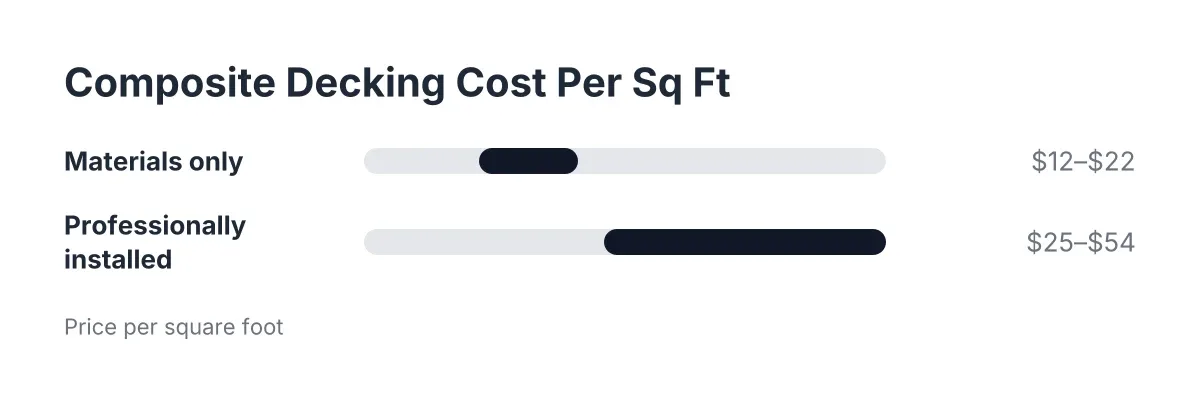
Sticker shock is the first hurdle for most homeowners. According to Angi, composite deck materials run $12 to $22 per square foot for boards alone, or $25 to $54 per square foot professionally installed. Pressure-treated wood costs meaningfully less upfront. So is composite decking worth it? For most Inland Empire homeowners, yes, and the math explains why.
Wood decks in Southern California need staining or sealing every one to two years. Our intense UV exposure breaks down finishes faster than in milder climates, so the maintenance clock runs quicker here than national advice suggests. Each refinishing cycle costs money, or it costs you a weekend of sanding and staining in the heat. Over 15 years, those cycles often erase the upfront savings of wood. Composite skips that entirely. You wash it, and you are done.
Where the Long-Term Math Tips
Consider lifespan next. A pressure-treated deck in our climate typically delivers 10 to 15 years before boards cup, crack, or splinter beyond repair. In contrast, quality capped composite carries fade and stain warranties of 25 to 50 years depending on the brand. That gap matters because so many decks are already aging out. The North American Deck and Railing Association estimates that of the more than 60 million decks in the U.S., roughly 30 million are past their useful life and need repair or replacement. If you are replacing a failed wood deck now, choosing wood again often means repeating this project in a decade.
That said, composite is not the answer for everyone. If you plan to sell within a few years, wood's lower upfront cost may pencil out better. Additionally, some homeowners simply prefer the feel and smell of real wood and accept the upkeep. We build both, so we have no stake in pushing you either way. However, when clients ask about composite vs wood deck cost over the full life of the structure, composite wins that comparison far more often than it loses. Our cost guide walks through the numbers so you can run your own scenario.
Durability and Maintenance in Southern California Heat
National reviews of composite decking rarely account for what a deck endures in the Inland Empire. Summer afternoons in Ontario, Fontana, and Riverside regularly push past 100 degrees. Meanwhile, our UV index sits among the highest in the country. These conditions punish decking materials, and they should shape your choice more than any national ranking does.
Heat retention is the issue homeowners underestimate most. Dark composite boards in full sun can get too hot for bare feet by mid-afternoon. As a result, we steer clients toward lighter colors, boards with heat-mitigating technology, and layouts that account for shade patterns. A patio cover or pergola over part of the deck changes the equation dramatically, which is one reason we design them together so often.
Fade Resistance and What Warranties Actually Cover
UV fade is the second local concern. Cheaper uncapped or thin-capped boards can shift color noticeably within a few seasons of Southern California sun. In practice, the fade warranty tells you what to expect. Premium lines warrant against fading beyond a small, measured color change for 25 years or more. Budget lines often exclude fade or define it loosely. Read that fine print before you buy, because two boards that look identical in the showroom can age very differently on a south-facing deck in Rancho Cucamonga.
Maintenance is where composite earns its reputation, even in our climate. You will not sand, stain, or seal it. Instead, plan on washing the deck with soap and water a couple of times per year to clear dust, pollen, and the fine grit our dry winds deposit. Keep debris out of the gaps between boards so water drains properly. Additionally, check fasteners and railing connections annually, since the frame beneath the composite is still wood and deserves attention. For general deck safety practices, the North American Deck and Railing Association publishes helpful inspection checklists.
One more local note: composite resists the dry-rot and insect damage that quietly destroys wood decks here. Because the boards contain no untreated wood surface, termites ignore them. That alone saves many Inland Empire homeowners from the ugly surprise of a spongy board underfoot.
Installation Realities: Why the Frame Matters as Much as the Boards
The composite decking material you choose is only half the story. Every composite deck sits on a structural frame, and in nearly all residential builds that frame is pressure-treated wood. Consequently, the quality of your framing, footings, and posts determines how long the whole deck lasts, no matter how premium the boards are.
Composite has installation requirements that wood does not. The boards expand and contract with temperature more than lumber does, which matters a great deal in a climate that swings from 45-degree winter mornings to 105-degree summer afternoons. Installers must leave precise gaps at board ends and follow each manufacturer's spacing chart. Get this wrong and boards buckle or pull fasteners. Additionally, most composite lines require tighter joist spacing than wood, often 16 inches on center or less, and even tighter for diagonal patterns. An old wood-deck frame frequently cannot accept composite boards without reinforcement.
Replacement, Resurfacing, and Permits
This is why deck replacement projects need an honest frame inspection first. NADRA estimates that about half of the roughly 50 million residential and commercial decks in the U.S. are more than 25 years old. If your frame falls in that group, resurfacing with new composite boards over aging joists is a false economy. Sometimes the frame is sound and resurfacing makes sense. Other times, footings have shifted or ledger connections have corroded, and a full rebuild is the safer call. We inspect before we quote, so you know which situation you are in.
Permits matter too. In Ontario, California and surrounding San Bernardino County and Riverside County cities, decks above a certain height or attached to the house typically require permits and inspections. A licensed local builder handles that paperwork, designs to current code, and knows the seismic and wind requirements specific to Southern California. Installed pricing reflects all of this labor and expertise, which is why the installed cost range runs well above the material-only price. Our composite decking cost guide explains exactly where that money goes.
Ready to Get Started?
If you are weighing composite against wood for a new deck, a replacement, or a resurfacing project anywhere in the Inland Empire, we can help you compare real boards, real numbers, and real designs for your yard. We build custom composite and wood decks throughout Ontario, Rancho Cucamonga, Fontana, Corona, Riverside, Chino, and Upland. Reach out for a design consultation and get material recommendations based on what actually lasts in Southern California sun.