Aluminum, Polycarbonate, or Fabric Patio Cover? How to Choose in Ontario, CA
You have decided to cover your patio or new deck. Good call. In the Inland Empire, shade is not a luxury; it decides whether you use your outdoor living space in August or hide indoors. The real question now is material. An aluminum patio cover handles our Southern California sun differently than polycarbonate panels or a fabric awning, and the right pick depends on how you plan to live under it. This guide walks you through the decision step by step, written for Ontario, CA homeowners by a local deck builder who installs these covers alongside custom decks every season.
Step 1: Decide How You Will Actually Use the Space
Before you compare a single material, write down what happens under this cover. Morning coffee? Weekend barbecues for twelve? A shaded play area off a new composite deck? Your answers narrow the field fast.
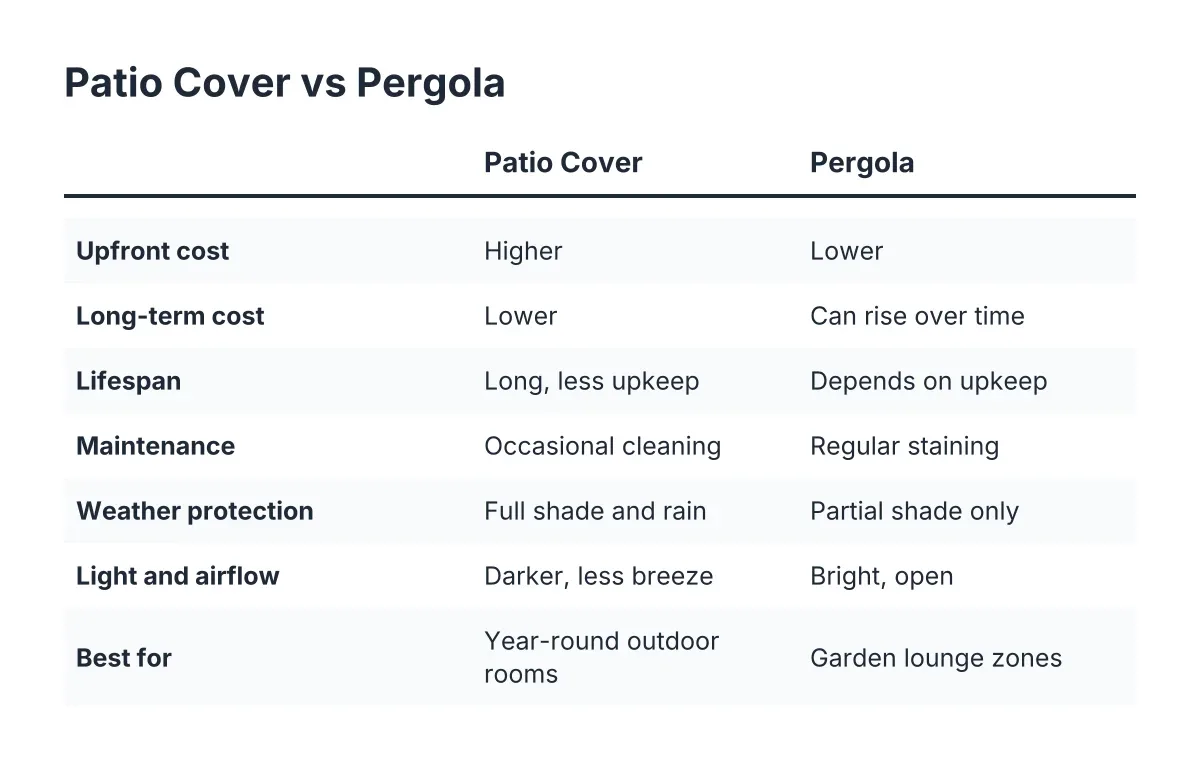
Full shade and full rain protection point you toward a solid-roof cover. Filtered light for plants points toward a lattice-style cover or polycarbonate panels. Occasional, flexible shade points toward fabric.
Also decide whether the cover attaches to the house or stands free in the yard. A patio cover attached to the house gives you continuous shelter from the back door, which matters if you want to grill in the rain. A freestanding cover gives you placement flexibility but usually needs its own footings and posts.
Step 2: Compare the Three Main Materials Honestly
Each material trades something for something else. Here is how they stack up for San Bernardino County and Riverside County conditions, where summers run hot and dry, winter brings short bursts of rain, and afternoon winds are a fact of life in cities like Fontana and Rancho Cucamonga.
Aluminum Patio Covers for Inland Empire Weather
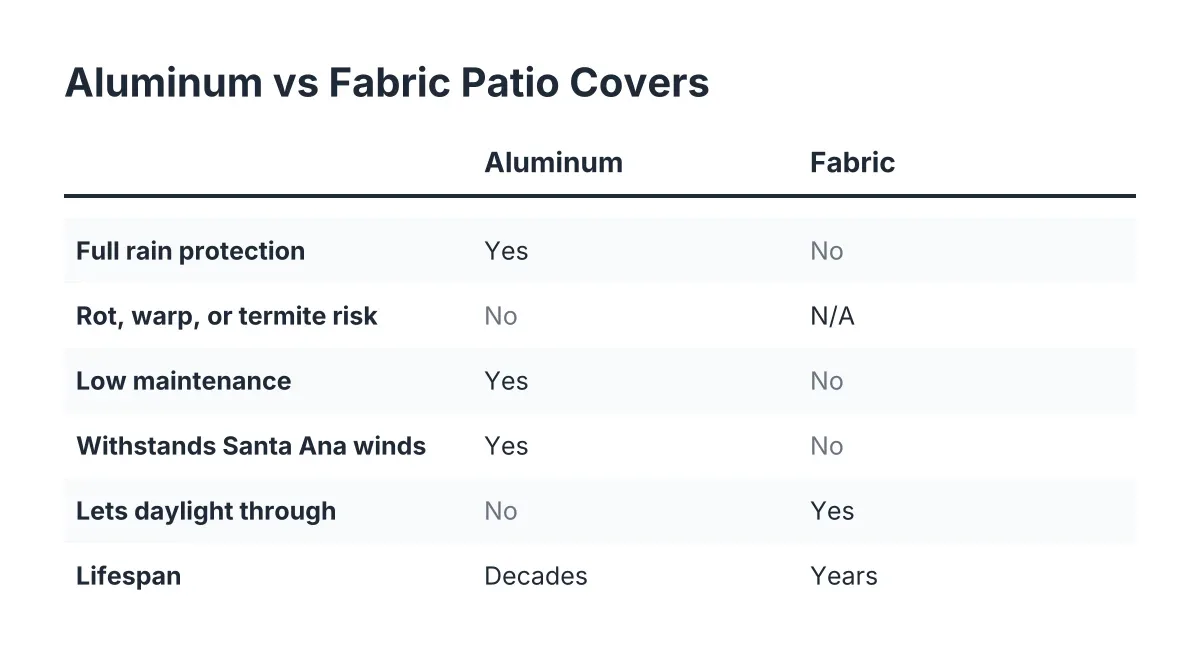
An aluminum patio cover suits the Inland Empire because it shrugs off the two things that destroy covers here: relentless UV exposure and dry heat. Aluminum will not rot, warp, crack, or feed termites, and modern wood-grain embossed panels look like painted wood without the repainting. For most Ontario, California homeowners, it is the lowest-maintenance solid-roof option available in 2026.
The trade-offs are real, though. Aluminum can dent if a heavy branch falls on it. It also reads as metal up close, even with wood-grain finishes, which bothers some homeowners who want the warmth of real lumber. Insulated aluminum panels cost more than basic ones but cut the heat radiating down onto your patio and quiet the drumming sound during rain.
Aluminum comes in two main styles:
- Solid (non-insulated or insulated) panels: full shade, full rain protection, and a true patio cover roof you can hang fans and lights from when the structure is rated for it.
- Lattice style: open slats that cut sun by a chosen percentage while keeping airflow, a strong fit for west-facing patios in Chino and Upland that bake in the afternoon.
Where Polycarbonate Panels Make Sense
Polycarbonate patio covers use translucent panels that let daylight through while blocking most UV. They make sense when the cover would otherwise darken a kitchen or family room behind it, a common problem with a solid patio cover attached to the house on a north-facing wall.
However, polycarbonate shows its limits in our climate. Clear and lightly tinted panels let heat through along with light, so a west-facing polycarbonate cover in Corona or Riverside can feel like a greenhouse by 4 p.m. Panels also collect dust and water spots, and in a region with long dry spells between rains, they need rinsing to stay presentable. Quality varies widely; cheap panels yellow and turn brittle under years of Southern California UV.
Where Fabric Covers Fit, and Where They Fail
Fabric options include fixed shade sails, retractable awnings, and canopy systems. Their appeal is price and flexibility. A retractable awning gives you sun when you want it and shade when you do not, and shade sails are often the cheapest way to cover a patio area at all.
The failure mode is wind and time. Inland Empire gusts, especially during Santa Ana events, punish stretched fabric, and most fabric products need re-tensioning, cleaning, or full replacement on a cycle measured in years rather than decades. Fabric also offers no real rain protection you would trust furniture under. Treat fabric as a shade accessory, not a permanent patio cover roof.
Step 3: Match the Material to Your Deck or Patio Below
The surface under the cover changes the math. If you are replacing an aging wood deck at the same time, plan both projects together. Posts for the cover should land on proper footings, not on deck boards, and the deck framing may need blocking where posts bear. Coordinating deck replacement and cover installation in one project avoids cutting into a brand-new deck later.
For second-story or elevated decks, think about what is underneath. A deck waterproofing system under the walking surface can keep the patio below dry, which changes whether you need a solid cover down there at all.
Suppose a homeowner in Ontario, CA has a 15-year-old wood deck with soft boards and a failing railing, and wants shade over the replacement. In that scenario, a sensible sequence is: demo the old deck, pour footings sized for both the new deck and the cover posts, frame the deck, then set the aluminum patio cover on those footings. Doing it in that order means one permit package, one inspection sequence, and no rework.
Step 4: Handle Permits Before Anything Gets Ordered
Do I Need a Permit to Build a Patio Cover in California?
Yes, in nearly all cases a patio cover in California requires a building permit, including attached and most freestanding covers in Ontario, San Bernardino County, and Riverside County. Permits confirm the structure meets wind and load requirements and that footings and attachments to the house are done correctly. Skipping the permit creates problems at resale and with insurance.
This is a point where the first-time planner should lean on their builder. A local deck building company that handles deck permits and planning can prepare the drawings, submit the application, and schedule inspections for both the deck and the cover. As a general reference point for budgeting, HomeAdvisor reports that a deck building permit typically costs between $230 and $500 depending on location; patio cover permits are a separate line item, so ask your builder what your city charges.
One honest caution: if your existing patio slab is cracked or thin, the inspector may require new footings for the cover posts regardless of material. Have a professional evaluate the slab before you order panels.
Step 5: Budget for the Material You Chose
Cover pricing varies with size, material grade, insulation, attachment method, and footing work, so treat any online number as a starting point rather than a quote. In general terms, fabric sits at the low end, lattice-style aluminum in the middle, and insulated solid-panel aluminum and quality polycarbonate systems at the top of the non-wood range.
The honest way to budget is per project, not per square foot from a national chart, because your site drives the cost. Several factors move the cost of an aluminum patio cover up or down:
- Size and span: longer spans need heavier beams and more posts.
- Insulated versus non-insulated panels: insulation adds cost but tames heat and noise.
- Attachment conditions: tying into stucco, fascia, or a roof edge each takes different labor.
- Footings: new concrete footings cost more than posting onto a sound existing slab the city will approve.
- Electrical: fans, lights, and outlets added during the build are far cheaper than retrofits.
If the cover is part of a larger deck replacement, budget the deck separately. According to Angi, composite decking runs about $25 to $54 per square foot professionally installed, which helps you frame the total project before you collect quotes.
Step 6: Decide Between DIY Kits and Professional Installation
Aluminum patio cover kits are sold widely, and a handy homeowner can assemble a small freestanding lattice kit over a sound slab. That is the realistic ceiling for DIY. Anything attached to the house, anything needing new footings, and anything in a windy corridor belongs with a licensed professional, because an under-anchored cover becomes a sail in a Santa Ana wind.
The stakes are not abstract. A study using CPSC injury surveillance data found 224,000 people nationally were injured due to a deck or porch over a five-year period, with 33,000 of those injuries tied to structural failure or collapse, according to Legacy Services LLC. Covers add load to the structures beneath and beside them, so attachment and support details matter.
Call a pro now, rather than later, if you see any of these on an existing cover:
- Posts that wobble, lean, or sit on bare dirt or pavers
- Rust streaks, separated panels, or sagging beams
- A ledger connection to the house that flexes or shows water staining
Step 7: Choose the Right Local Installer
For a first-time planner, three questions separate a solid installer from a risky one. First, ask who pulls the permit; the right answer is the contractor, not you. Second, ask how posts will be footed on your specific slab or deck, and expect a specific answer, not "we'll see." Third, ask for a written scope that lists panel type, insulation, color, footings, electrical, and cleanup.
A fair quote itemizes those pieces so you can compare bids line by line instead of guessing why one number is lower. Because patio covers and decks share footings, framing logic, and the same inspection process, an Ontario, CA deck builder who does both can design the cover and the deck as one structure instead of two bolted-together afterthoughts.
Ready to Cover Your Ontario, CA Patio?
If you are weighing aluminum against polycarbonate or fabric for your backyard in Ontario, Rancho Cucamonga, Upland, Chino, Fontana, Corona, or Riverside, talk it through with a local deck builder who installs these covers in Inland Empire conditions year-round. Reach out for a free quote on a patio cover, a custom deck, or both built as one project, and get a written scope you can actually compare.
If you need custom deck design, Inland Empire Decks can help.
Prefer to talk it through? Call (909) 298-8578 — a quick call is usually the fastest way to get a straight answer for your situation.