Deck Repair Terms Explained: A Plain-English Glossary
If you own a deck in Ontario, CA and you are reading repair quotes full of unfamiliar words, this deck repair glossary is for you. Each entry gives you a plain-English definition in the first sentence, then explains why the term matters when you talk to a deck builder. Use it to read an estimate line by line, spot problems early, and ask sharper questions. Everything here applies to the wood and composite decks common across the Inland Empire.
- Joist: the boards that hold up your deck floor
- Ledger board: where the deck attaches to the house
- Deck footing: the concrete base under each post
- Deck post: the vertical supports under the frame
- Flashing: metal that keeps water out of the ledger
- Fascia board: the trim that covers the deck's edges
- Dry rot: fungus damage that crumbles wood
- Deck resurfacing: new boards on an existing frame
- Deck board replacement: swapping out damaged boards only
- Sistering: bolting a new joist alongside a weak one
- Sealing and staining: protective coatings for wood decks
- Composite decking: boards made from wood fiber and plastic
- Structural inspection: a pro checking the frame and connections
- Deck permit: city approval for structural deck work
- Scope of work: the written list of what a quote covers
- Change order: a written update when the job changes mid-project
Deck Structure Terms in Your Repair Glossary
These are the parts of the deck itself. Most of the terms in this section show up on quotes because repairs are priced by which part is damaged and how hard it is to reach.
Joist
A joist is one of the horizontal boards under your deck that supports the floor boards you walk on. Joists usually run side by side every foot or so, hidden beneath the decking. When a deck feels bouncy or soft in one spot, a damaged joist is a common cause. If a quote mentions joist repair or replacement, the problem is structural, not cosmetic, and the price reflects opening up part of the deck to reach it.
Ledger Board
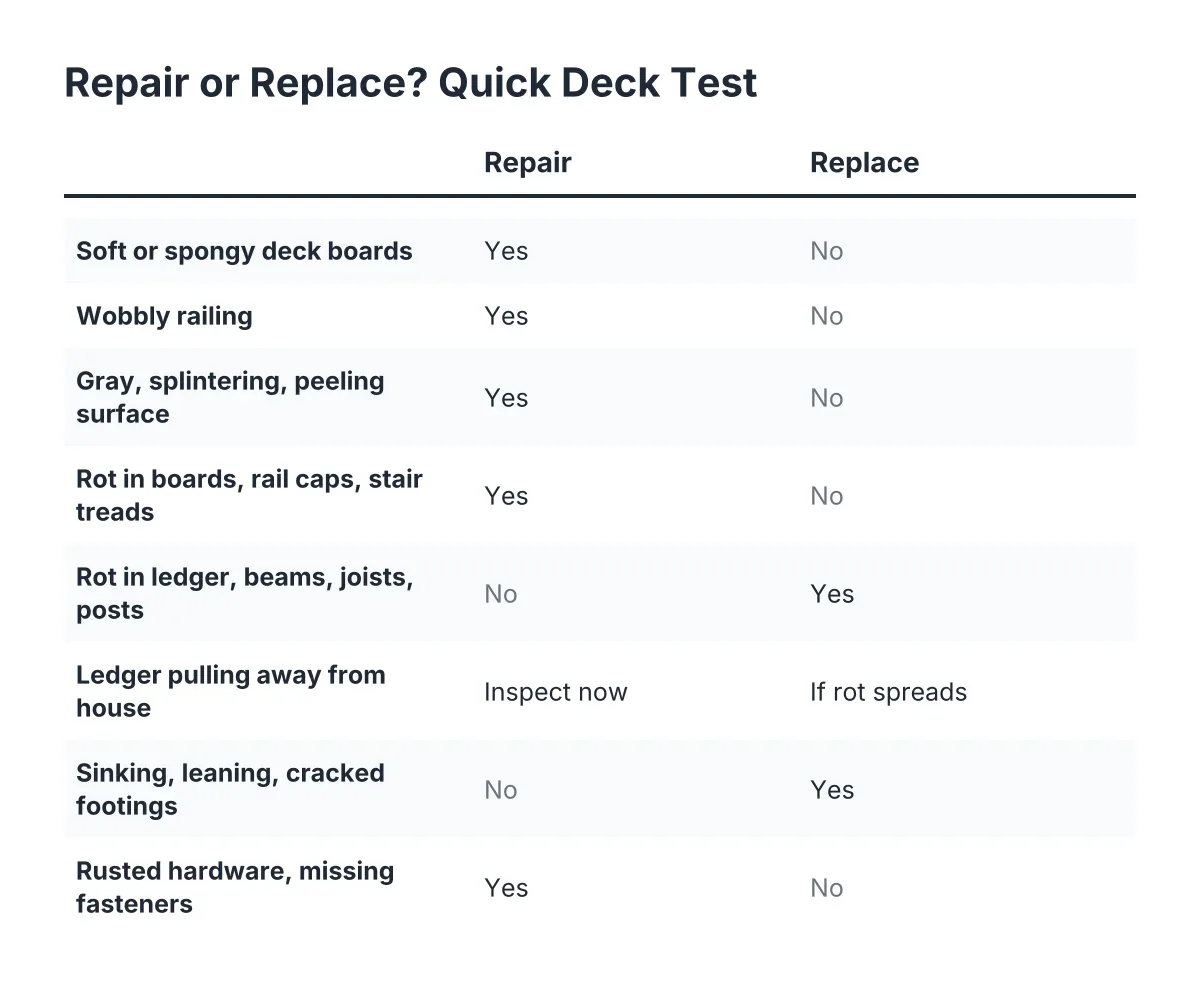
A ledger board is the long board that attaches a deck to the side of your house. It carries a large share of the deck's weight, so a failing ledger is one of the most serious problems a deck can have. Water getting behind the ledger is a leading cause of deck collapses, which is why inspectors look at it first. If a contractor flags the ledger, take it seriously and ask how they plan to reattach and waterproof it.
Deck Footing
A deck footing is the concrete base in the ground that supports each deck post. Footings keep the deck from sinking or shifting over time. In Southern California, footings matter for stability on sloped or settling soil, and footing depth is set by your local building department. If a repair quote includes new footings, the crew will dig and pour concrete, which adds time and cost compared to above-ground work.
Deck Post
A deck post is a vertical support that carries the deck's weight down to the footings. Posts sit between the footing below and the beams above. Rot at the bottom of a post, where it meets concrete and moisture, is a frequent repair in older Inland Empire decks. Replacing a post means temporarily supporting the deck, so expect that line item to cost more than surface work.
Flashing
Flashing is the thin metal barrier installed over the ledger board to keep water from seeping between the deck and the house. Without good flashing, rain works its way into the ledger connection and rots it from behind, where you cannot see it. Missing or corroded flashing is a common finding on decks built decades ago. If a repair quote adds flashing, that is cheap insurance against the most expensive kind of deck damage.
Fascia Board
A fascia board is the trim board that covers the exposed outer edges of a deck frame. It is mostly cosmetic, hiding the cut ends of joists and giving the deck a finished look. Because fascia takes direct sun and rain, it often weathers before the frame behind it does. Replacing fascia is one of the lower-cost repairs, so a quote heavy on fascia work usually means the structure underneath is sound.
Damage and Repair Terms in Your Deck Glossary
This group covers what goes wrong and how a deck builder fixes it. If you want a deeper look at the causes, read what causes wood deck damage in the Inland Empire.
Dry Rot
Dry rot is wood decay caused by a fungus that eats the fibers of the wood, leaving it brittle and crumbly. Despite the name, dry rot starts with moisture, often from sprinklers, poor drainage, or failed sealant. You can test for it by pressing a screwdriver into suspect wood; if it sinks in easily, the wood is compromised. Dry rot spreads, so a contractor who finds it will want to cut out all affected wood, not just patch the visible spot.
Deck Resurfacing
Deck resurfacing means removing the old deck boards and railing and installing new ones on the existing frame. It works when the joists, posts, and footings are still sound but the surface is worn, splintered, or faded. Resurfacing costs less than full deck replacement because the structure stays in place. Many Ontario, CA homeowners use resurfacing as the moment to switch from wood to composite decking. If you are weighing this choice, see signs your deck needs repair versus full replacement.
Deck Board Replacement
Deck board replacement is swapping out individual damaged boards while leaving the rest of the deck alone. It is the right fix when damage is limited to a few cracked, cupped, or rotted boards. The main catch is matching: new boards rarely match weathered ones until stain or sun evens them out. A quote for board replacement signals a targeted deck repair rather than a structural project, which keeps the cost down.
Sistering
Sistering means fastening a new joist directly alongside a weakened one so the two share the load. It is a standard, accepted way to restore strength without tearing out the whole frame. Builders sister joists that are cracked, sagging, or partly rotted but still mostly intact. If your quote lists sistering, the contractor is reinforcing rather than replacing, which usually saves money.
Sealing and Staining
Sealing and staining are protective coatings applied to a wood deck to block water and UV damage. Sealant repels moisture, while stain adds color and sun protection; many products do both. In the Inland Empire, intense sun breaks down these coatings faster than in milder climates, so wood decks here need recoating on a regular schedule. A deck builder who includes staining and sealing in a repair quote is protecting the new work, not padding the bill.
Composite Decking
Composite decking is board material made from a blend of wood fibers and plastic, designed to resist rot, splinters, and insects. It never needs staining or sealing, which is why many homeowners choose it when resurfacing an older wood deck. Composite costs more per board than most wood, but it cuts ongoing maintenance to washing. If your repairs keep repeating on the same wood deck, ask your deck builder whether composite makes sense for the next surface.
Paperwork and Pricing Terms
These terms show up on quotes, contracts, and city paperwork. Cost questions come up constantly, and this deck repair cost guide covers the factors in more depth.
Structural Inspection
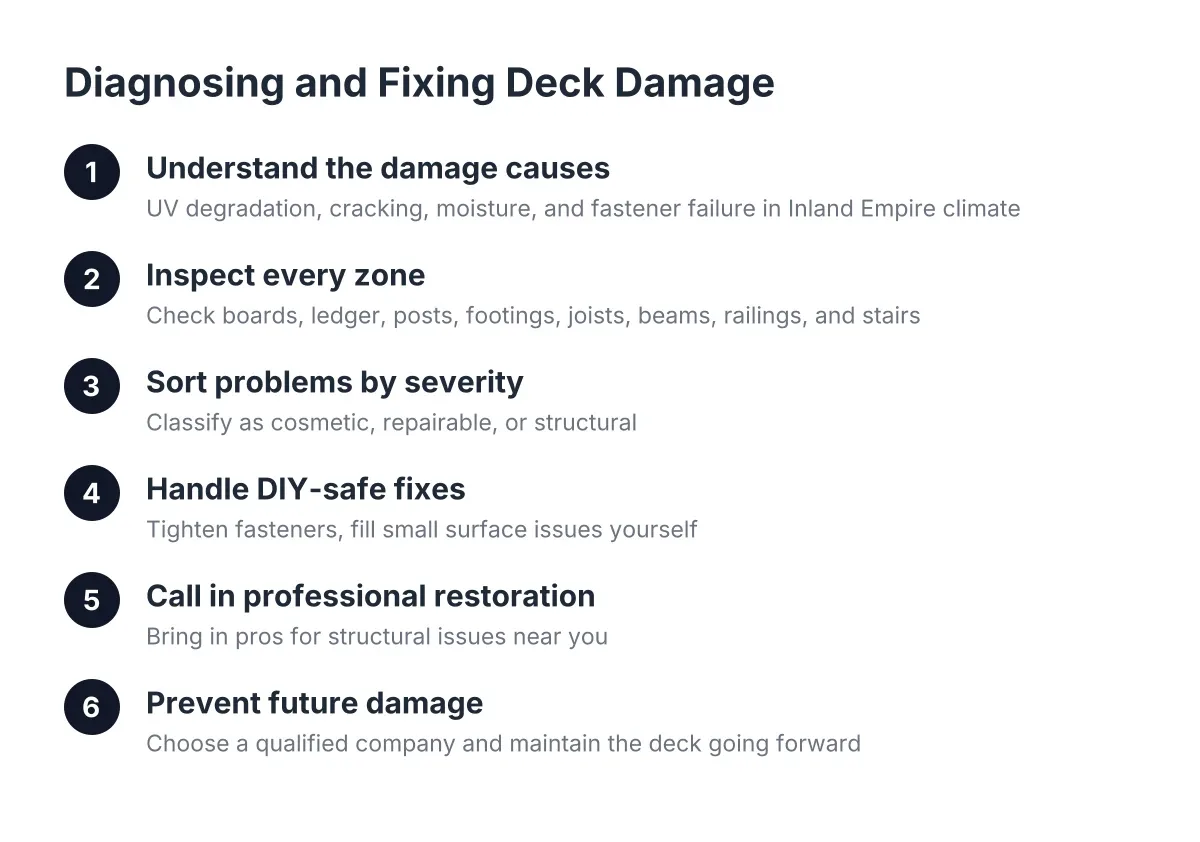
A structural inspection is a hands-on check of a deck's frame, connections, and supports to find damage you cannot see from the surface. The inspector probes for rot, checks fasteners, and examines the ledger, posts, and footings. Getting one before approving a repair quote tells you whether the problem is one bad board or a failing frame. A good local deck builder will walk you through the findings in plain language.
Deck Permit
A deck permit is written approval from your city's building department to do structural work on a deck. In Ontario, California, as in most cities, cosmetic fixes like swapping boards usually do not need one, but structural changes often do. Rules vary by city and county, so check with your local building department before major work. A contractor who handles permits and planning for you is taking on paperwork you would otherwise manage yourself.
Scope of Work
A scope of work is the written section of a quote that lists exactly what the contractor will do, with what materials. It is the single most important part of any deck repair agreement, because anything not listed is not included. Read it line by line and ask about anything vague, like "repair as needed." A clear scope protects both you and the deck builder when the job is underway.
Change Order
A change order is a written amendment to the contract when the work changes after the project starts. Deck repairs trigger change orders often, because hidden rot only shows up once boards come off. A fair change order states the added work and the added cost before the crew proceeds. Ask your contractor up front how they handle surprises, so a mid-project discovery does not become a dispute.
Using These Terms
With this deck repair glossary in hand, you can read a quote line by line and know whether you are paying for cosmetic fixes or structural work. You can also ask the questions that matter, like how the ledger will be flashed or whether a joist will be sistered or replaced. That is the difference between hoping a quote is fair and knowing what you are buying.
If you need custom deck design, Inland Empire Decks can help.
Prefer to talk it through? Call (909) 298-8578 — a quick call is usually the fastest way to get a straight answer for your situation.