Deck Safety Inspection Terms Explained: A Plain-English Glossary
If you own a deck in Ontario, CA and you have started reading about inspections, you have probably hit words like ledger board, flashing, and joist hangers without a clear explanation. This deck safety inspection glossary puts those terms in plain English so you can read a quote line by line, ask better questions, and spot real warning signs on your own deck. It is written for Inland Empire homeowners and buyers, not for contractors. Keep it open the next time a deck builder walks your backyard.
- Ledger Board: the board that ties your deck to the house
- Flashing: the metal barrier that keeps water out of the ledger
- Joist: the boards that carry your deck floor
- Joist Hanger: the metal bracket holding each joist in place
- Footing: the concrete base under each post
- Post: the vertical support holding the deck up
- Beam: the big horizontal board resting on the posts
- Lateral Load Connection: hardware that stops the deck from pulling away
- Dry Rot: wood decay caused by fungus and moisture
- Deck Framing: the whole structural skeleton under the boards
- Deck Resurfacing: new boards and railings on an existing frame
- Baluster Spacing: the gap rule for railing pickets
- Graspable Handrail: a stair rail your hand can actually grip
- Visual Inspection: a look-only check, no tools or dismantling
- Probe Test: poking wood to find hidden rot
- Permit: the city's written approval for deck work
- Inspection Report: the written findings after a deck check
- Scope of Work: exactly what a quote does and does not include
Structure Terms: What Holds Your Deck Up
Most of the scary-sounding words in a deck safety inspection glossary live here, in the framing under your feet. These parts do the heavy lifting, and they are where most deck failures start.
Ledger Board: Key to Deck Safety Inspection Glossary Basics
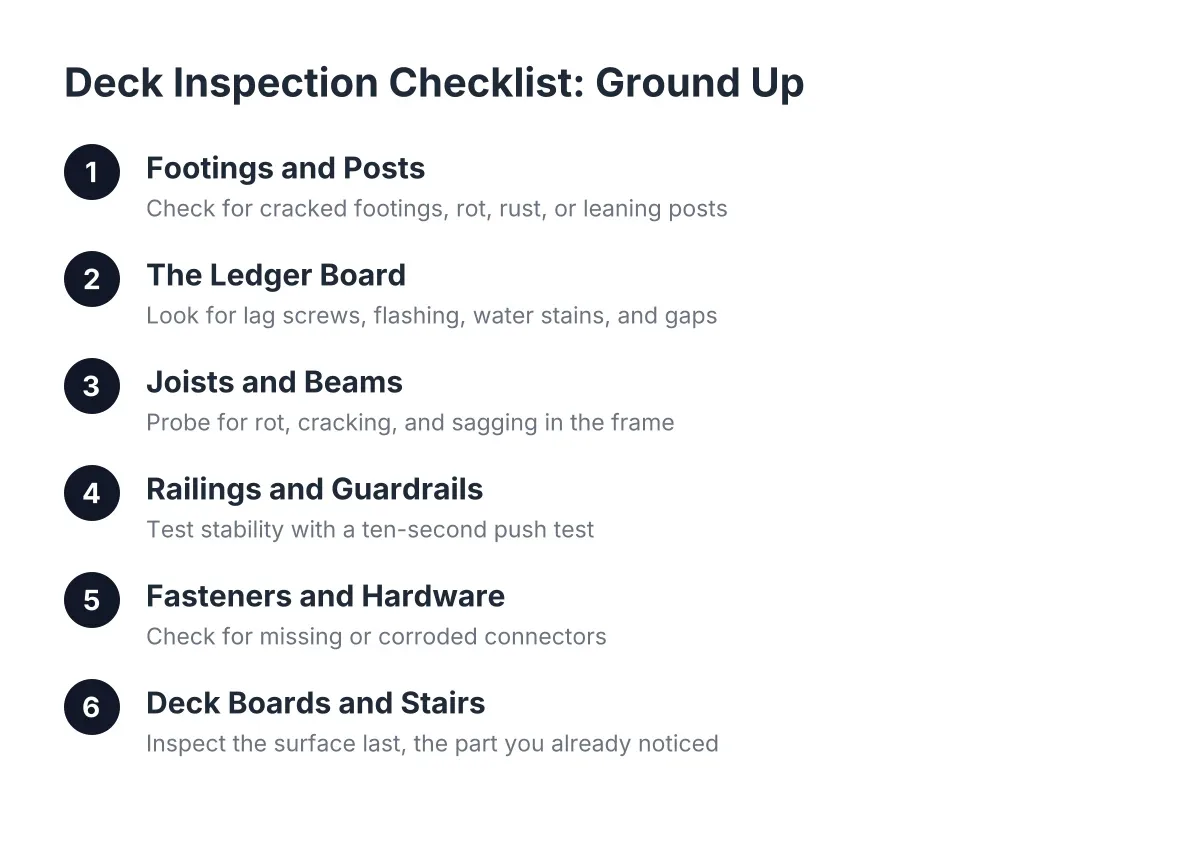
A ledger board is the horizontal board that attaches an attached deck to the side of your house. It carries a large share of the deck's weight, so inspectors check it first. If a ledger is fastened with nails instead of structural bolts or screws, that is a common and serious problem. When a deck builder in Ontario, CA mentions ledger repair, expect it to affect the quote more than a cosmetic fix would.
Flashing
Flashing is a thin metal or plastic barrier installed above the ledger board to steer water away from the connection between the deck and the house. Without it, rain soaks into the wood behind the ledger and rots it where you cannot see. Missing or damaged flashing is one of the most common findings on older Inland Empire decks. Replacing it often means pulling a few deck boards, so it adds labor to a repair job.
Joist
A joist is one of the repeating horizontal boards that support the deck floor from underneath. Joists sit side by side, spaced at regular intervals, and your decking screws down into them. Sagging, cracked, or rotted joists mean the floor itself is losing support. If an inspector flags joists, ask whether they can be reinforced or whether sections of the frame need deck replacement.
Joist Hanger
A joist hanger is a metal bracket that holds the end of a joist against the ledger or a beam. Each hanger needs the right nails in every hole, not just a few. Rusted, missing, or half-nailed hangers are a frequent finding and an affordable fix when caught early. This is one reason a periodic deck safety inspection pays for itself; small hardware problems are cheap now and expensive later.
Footing
A footing is the concrete base in the ground that supports each deck post. Footings spread the deck's weight so posts do not sink or shift over time. In Southern California, inspectors look for footings that are undersized, cracked, or sitting on loose soil. Posts resting directly on dirt, with no footing at all, usually mean the frame was never built to code.
Post
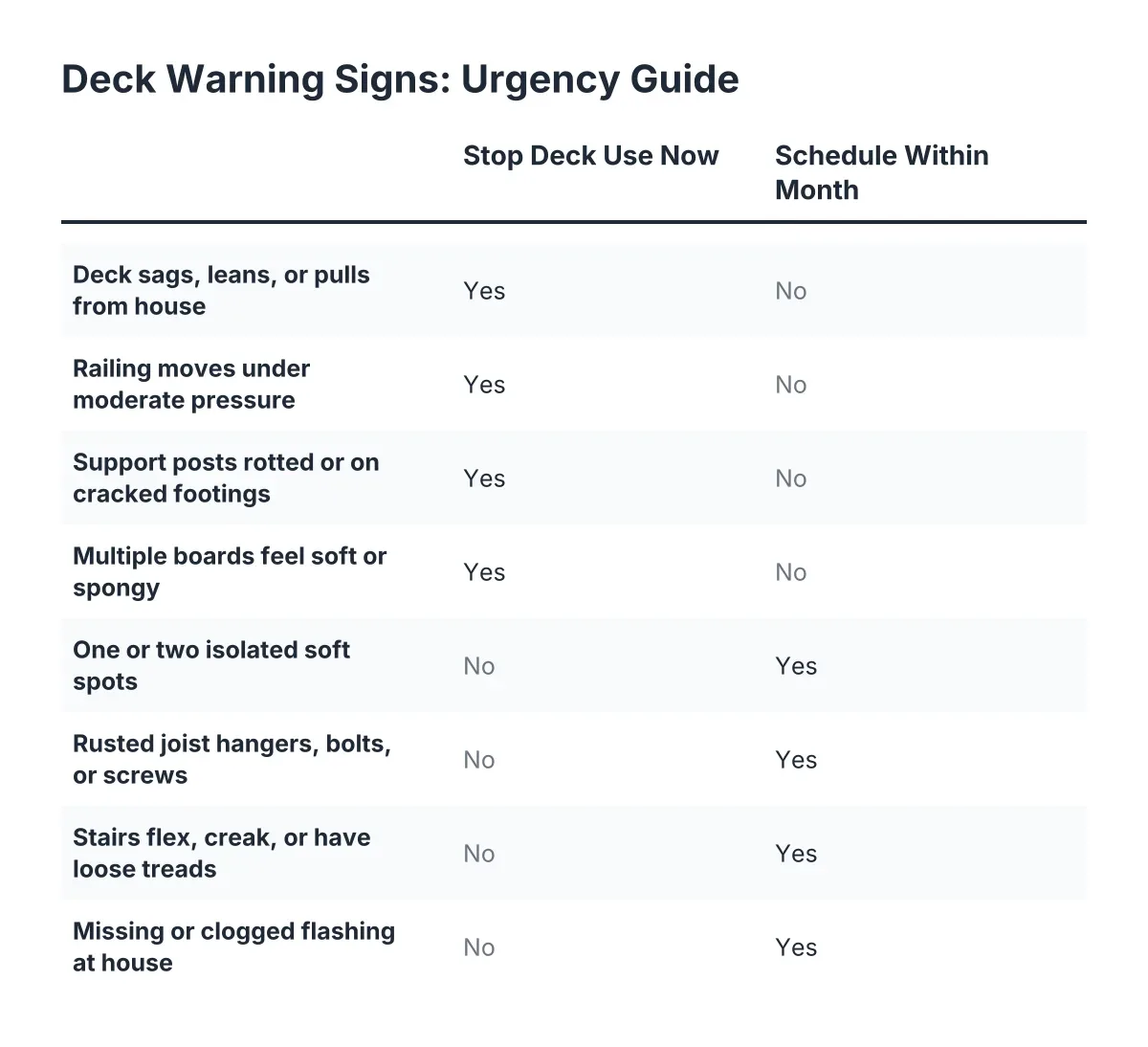
A post is a vertical support that carries the deck's weight from the beams down to the footings. Inspectors check posts for rot at the base, leaning, and proper connection hardware at both the top and the bottom. A post that moves when you push on it is a stop-and-fix problem. Deck footing and post installation is standard repair work, so a flagged post does not automatically mean a full rebuild.
Beam
A beam is the large horizontal board, or doubled set of boards, that rests on the posts and carries the joists. Think of it as the backbone of the frame. Cracks, sagging, or rot in a beam matter more than the same damage in a single joist because a beam supports many joists at once. Beam replacement is bigger work, so it changes the scope of a repair quote.
Lateral Load Connection
A lateral load connection is special hardware that keeps an attached deck from pulling away from the house sideways. Bolts through the ledger resist downward weight; lateral connectors resist the back-and-forth movement from people walking, dancing, or leaning. Many older decks were built before this hardware was common. Adding it is a standard upgrade an inspector may recommend even on a deck that is otherwise sound.
Dry Rot
Dry rot is wood decay caused by a fungus that feeds on damp wood and leaves it soft, crumbly, or stringy. The name misleads people; the rot needs moisture to start, then keeps spreading. Rot often hides where the ledger meets the house, at post bases, and under deck boards. Catching it early can mean deck board replacement instead of structural repair, which is why inspectors probe suspect areas instead of trusting looks alone.
Surface and Railing Terms
Deck Framing: Core Components in Deck Safety Inspection Glossary
Deck framing means the complete structural skeleton of the deck: the ledger, posts, beams, and joists together. When a report says the framing is sound, the bones are good even if the surface looks tired. That matters for cost, because a solid frame opens the door to deck resurfacing instead of full deck replacement. Always ask which parts of the framing were inspected and how.
Deck Resurfacing
Deck resurfacing is replacing the walking surface and railings of a deck while keeping the existing frame. It is the middle option between repair and replacement. Resurfacing only makes sense when an inspection confirms the framing underneath is solid, so the two go hand in hand. Many Ontario, CA homeowners pair resurfacing with a switch to composite decking to cut future maintenance.
Baluster Spacing
Baluster spacing is the gap between the vertical pickets in a deck railing. The spacing rule exists to keep small children from slipping through or getting stuck. Inspectors check gaps along railings and on stairs, and they also push on the railing to test for looseness. A wobbly railing is one of the most common and most fixable findings, often handled through straightforward deck railing installation.
Graspable Handrail
A graspable handrail is a stair rail shaped so your hand can wrap around it and hold on during a fall. A wide flat board on top of a railing looks fine but does not count, because fingers cannot grip it. Stairs are where deck injuries cluster, so inspectors pay close attention here. Adding a proper handrail is usually a small line item on a repair quote.
Process, Paperwork, and Pricing Terms
Visual Inspection
A visual inspection is a check of the deck using eyes and simple hand tools only, without removing boards or dismantling anything. It covers connections, hardware, rot signs, railing stability, and stairs. Most routine deck checks are visual, and they catch the large majority of problems. If you want to see what a thorough one covers, this walkthrough of what professional inspectors actually look for breaks it down step by step.
Probe Test
A probe test means pressing a screwdriver, awl, or similar tool into wood to find rot that looks fine on the surface. Sound wood resists the tool; rotted wood lets it sink in. Inspectors probe the ledger, post bases, stair stringers, and anywhere water tends to sit. If a provider mentions probing in their process, that is a sign of a careful inspection rather than a quick glance.
Permit
A permit is written approval from your city or county to build, replace, or structurally modify a deck. In Ontario, CA and across San Bernardino County, structural deck work typically needs one; rules vary by city, so check with your local building department. An inspection sometimes reveals that an existing deck was built without a permit, which matters when you sell the house. A deck builder who handles deck permits and planning can walk you through what your project needs.
Inspection Report
An inspection report is the written summary of what the inspector found, usually with photos, a list of problems, and a severity rating for each. A good report separates safety issues from cosmetic ones so you can prioritize. Keep it; it becomes your checklist when you collect repair quotes. If you are deciding how often to get one, this timing and frequency guide covers when inspections make sense.
Scope of Work
A scope of work is the section of a quote that spells out exactly what the contractor will do, what materials they will use, and what is excluded. Vague scopes cause most pricing disputes, because two quotes with different scopes are not comparable. Match each line of the scope against the inspection report before you sign. Related costs vary with deck size, damage, and access, so read the cost guide for deck inspections before comparing numbers.
Using These Terms
With this deck safety inspection glossary in hand, you can read a report or a repair quote line by line and know what each item means for your deck's safety and your budget. Ask the sharper questions: how was the ledger fastened, was the wood probed, does the scope match the findings. A local Ontario, CA deck builder who inspects and repairs decks every week will have clear answers, and now you will understand them.
If you need custom deck design, Inland Empire Decks can help.
Prefer to talk it through? Call (909) 298-8578 — a quick call is usually the fastest way to get a straight answer for your situation.