Deck Building Terms Explained: A Plain-English Glossary
If you are getting quotes for a new deck in Ontario, CA and the paperwork reads like a foreign language, this deck building glossary is for you. It translates the words deck builders, inspectors, and material suppliers use every day into plain English. Use it to read a quote line by line, ask sharper questions, and spot gaps before you sign anything. Every definition here stands on its own, so you can skim straight to the term that is confusing you.
- Footing: the concrete anchor under your deck
- Post: the vertical support that carries the load
- Beam: the horizontal backbone of the frame
- Joist: the boards your decking sits on
- Ledger Board: where the deck attaches to the house
- Decking (Deck Boards): the surface you walk on
- Composite Decking: low-maintenance boards made from wood and plastic
- Pressure-Treated Lumber: wood treated to resist rot and insects
- Railing and Balusters: the guard system around the deck edge
- Attached vs. Freestanding Deck: connected to the house or standing alone
- Elevated Deck: a deck raised off the ground on posts
- Multi-Level Deck: a deck built in connected tiers
- Building Permit: the city's official approval to build
- Setback: the required distance from your property line
- Load (Live Load and Dead Load): the weight your deck must safely carry
- Deck Resurfacing: new boards on an existing frame
- Deck Replacement: tearing out the old deck and building new
- Staining and Sealing: the protective finish on wood decks
Deck Building Glossary: Structure and Framing Terms
These are the bones of the project. When a deck builder in Ontario, CA walks your yard and talks about footings, posts, and joists, this is what they mean. This part of the deck building glossary covers the parts you will never see once the deck is finished, but they decide whether it lasts.
Footing
A footing is the concrete base poured into the ground that anchors and supports a deck post. Footings keep the deck from sinking, shifting, or tipping over time. Their size and depth depend on your soil and local building rules, so a builder who talks about footing requirements before quoting is doing it right. Skipped or undersized footings are one of the most common reasons older decks fail inspection.
Post
A post is the vertical piece of lumber or steel that carries the deck's weight from the frame down to the footing. Posts do the heavy lifting on any elevated deck, so their size and spacing matter. If a repair quote mentions replacing posts, the builder found structural trouble, not just cosmetic wear. Proper deck footing and post installation is the foundation of everything above it.
Beam
A beam is a large horizontal piece of the frame that sits on the posts and supports the joists. Think of it as the backbone of the deck. Beams are usually built from two or three boards fastened together. If a builder says your existing beam is undersized, it means the deck may sag or bounce under weight, and fixing it is a structural job, not a quick patch.
Joist
A joist is one of the repeated horizontal boards that run across the frame and directly support the deck boards. Joists are spaced at set intervals, and that spacing affects how solid the deck feels underfoot. Composite decking often requires tighter joist spacing than wood, which is why switching materials can change the framing plan and the deck cost. Rotted joists are a frequent finding during deck repair estimates.
Ledger Board
A ledger board is the horizontal board bolted to your house that an attached deck hangs from. It is one of the most failure-prone parts of a deck when installed wrong, because water can get behind it and rot the house framing. A careful builder will talk about flashing, which is the metal or membrane barrier that keeps water out of that connection. If a quote for an attached deck never mentions the ledger or flashing, ask about it.
Decking Materials and Surfaces: Deck Building Glossary Terms
The surface is what you see, touch, and maintain, so material terms come up in every quote.
Decking (Deck Boards)
Decking means the boards that form the walking surface of the deck. This is the part you see, so material choice drives both the look and the long-term upkeep. Deck boards wear out faster than the frame underneath, which is why board replacement and resurfacing exist as separate, smaller projects. When comparing quotes, confirm which decking material each builder priced, because the surface is a major share of the total.
Composite Decking
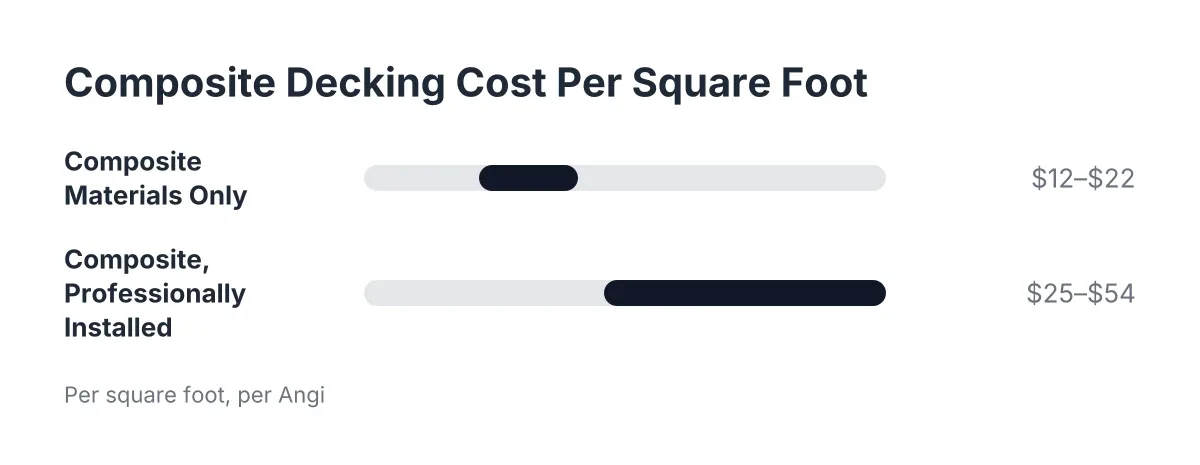
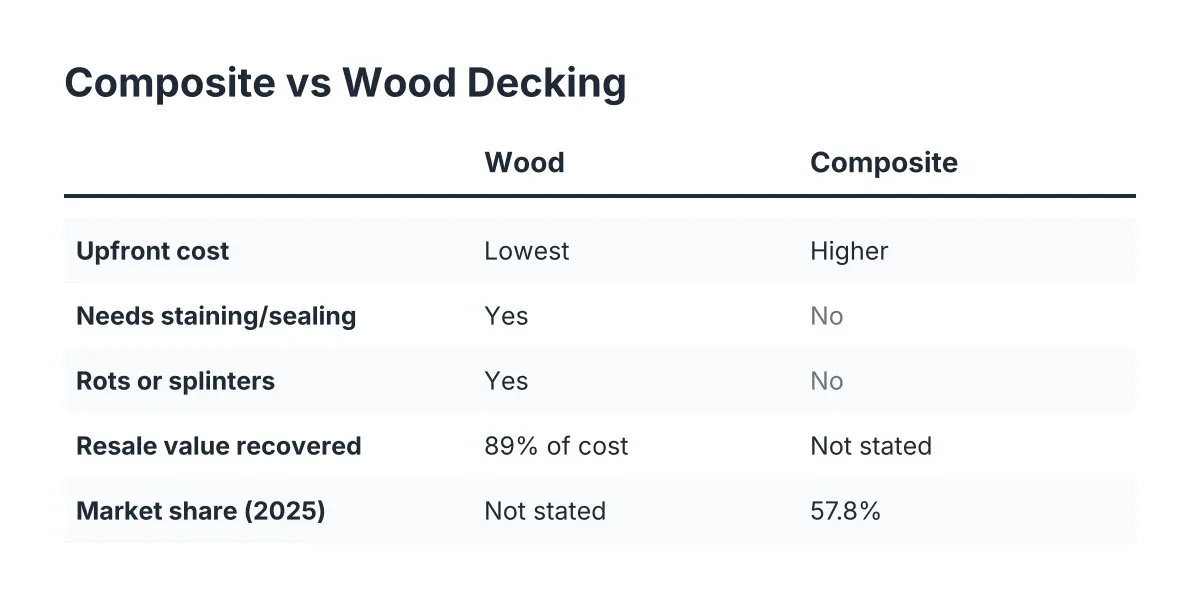
Composite decking is a manufactured board made from a blend of wood fibers and plastic. It resists fading, splintering, and rot better than plain wood and never needs staining, which matters in the strong Inland Empire sun. It costs more up front than wood but asks for far less maintenance over its life. Many Ontario, CA homeowners choose composite for exactly that trade-off, and our guide on deck building cost walks through how material choice moves the number.
Pressure-Treated Lumber
Pressure-treated lumber is wood that has been infused with preservatives under pressure to resist rot, decay, and insects. It is the standard material for deck framing even when the surface boards are composite. For the walking surface, it is the budget-friendly wood option, but it needs regular staining and sealing to hold up. If a quote says "PT lumber," this is what it means.
Railing and Balusters
A railing is the guard system around the edge of a deck, and balusters are the vertical pickets that fill the space between the top rail and the deck. Railings are a safety requirement on decks above a certain height, so they are rarely optional. Baluster spacing follows safety rules meant to keep small children from slipping through. Railing material, whether wood, metal, or composite, is a line item worth checking on any quote because styles vary widely in price.
Deck Types and Project Terms
Builders use shorthand for deck configurations and project scopes. Knowing these terms helps you compare quotes that describe the same yard in different words. Around the Inland Empire, sloped lots and patio-door heights make several of these come up often in deck building conversations.
Attached vs. Freestanding Deck
An attached deck is connected to the house through a ledger board, while a freestanding deck stands on its own posts and footings with no structural tie to the home. Freestanding decks avoid cutting into the house's exterior, which some homeowners prefer. Attached decks can be simpler to frame but demand careful waterproofing at the house connection. Your builder should explain which approach fits your home and why.
Elevated Deck
An elevated deck is a deck raised off the ground on posts, usually to meet a second-story door or to handle a sloped yard. Height adds engineering: taller posts, bracing, required railings, and often stairs. That extra structure is why elevated deck construction costs more than a ground-level platform of the same size. If your back door sits well above grade, this is the term you will hear.
Multi-Level Deck
A multi-level deck is a single deck built in two or more connected tiers at different heights. Builders use levels to follow a sloped yard or to separate zones, like a dining area above and a seating area below. Each level needs its own framing and often its own stairs and railing, so levels add cost and build time. It is a popular way to turn an awkward slope into usable outdoor living space.
Permits, Paperwork, and Maintenance
Building Permit
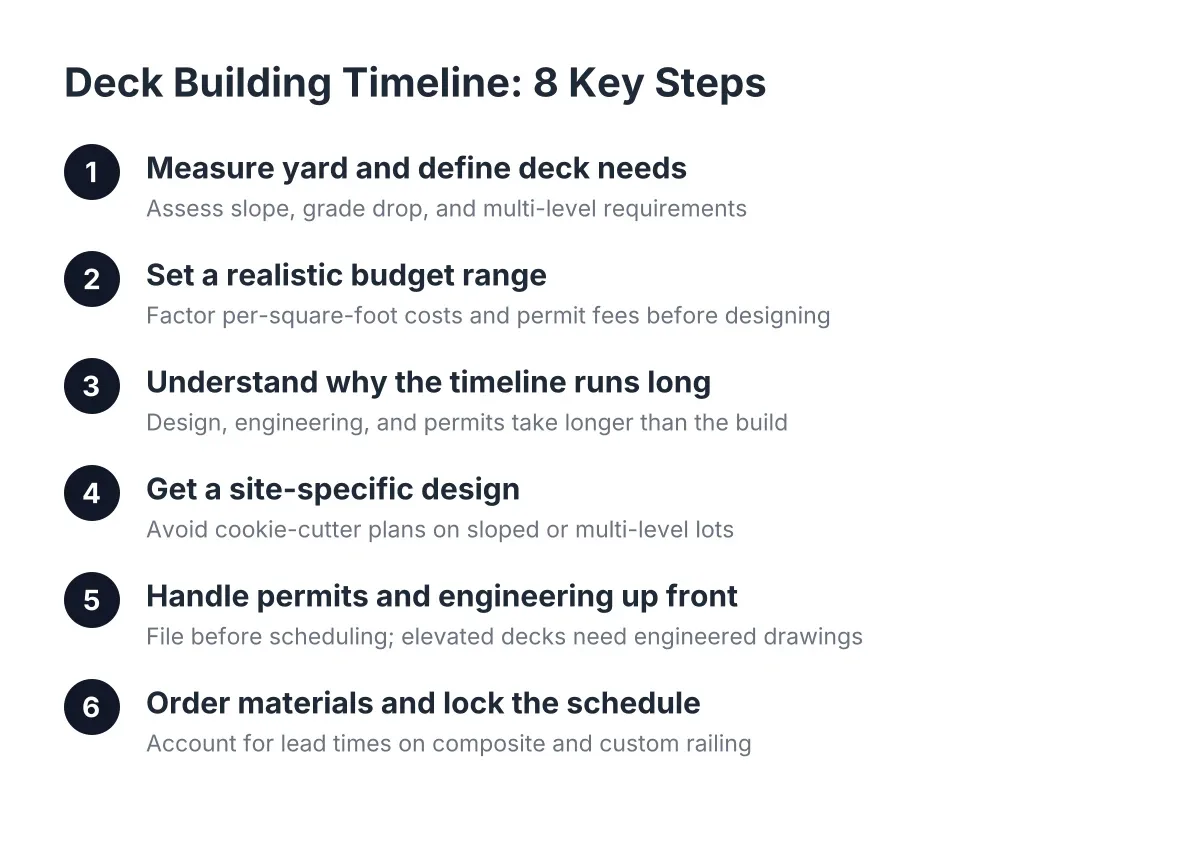
A building permit is the official approval from your city allowing you to construct or significantly alter a deck. In Ontario, California, as in most of San Bernardino County, decks above a certain size or height typically need one, and permitted work gets inspected at key stages. A builder who handles deck permits and planning for you is taking on real legwork, and that should show in the scope of the quote. Unpermitted decks can create headaches when you sell the house. Permitting is also one of the steps covered in our local deck building timeline breakdown.
Setback
A setback is the minimum distance your deck must keep from property lines, easements, or other structures, as set by local zoning rules. Setbacks can shrink the buildable area of your yard before design even starts. A builder who asks about your property lines early is checking setbacks, not making small talk. Check your local code or let your builder confirm the rules for your lot.
Load (Live Load and Dead Load)
Load means the weight a deck is designed to safely carry, split into dead load (the structure itself) and live load (people, furniture, planters, and hot tubs). Load requirements drive the size of footings, posts, beams, and joists. If you mention a hot tub or outdoor kitchen, expect the framing plan and price to change, because concentrated weight needs stronger support. A builder who asks how you plan to use the deck is sizing the structure to the load.
Deck Resurfacing
Deck resurfacing means replacing the walking surface and sometimes the railing while keeping the existing frame underneath. It is the middle option between repair and full replacement, and it only works if the frame is still sound. A good builder will inspect the joists, beams, and posts before promising a resurface. If the frame has rot, resurfacing wastes money on a structure that is already failing.
Deck Replacement
Deck replacement means removing the old deck entirely and building a new one in its place. It is the right call when the frame is rotted, the footings are failing, or the old deck was never built to current safety standards. Replacement costs more than repair or resurfacing but resets the clock completely. A quote for replacement should include demolition and haul-away, so confirm those lines are present.
Staining and Sealing
Staining and sealing means applying protective finishes to a wood deck to guard it against sun, moisture, and wear. Stain adds color and UV protection, while sealer blocks water from soaking into the boards. In Southern California's dry heat, sun damage is the bigger enemy, so regular refinishing keeps a wood deck from graying and cracking. Composite decking skips this chore entirely, which is a big part of its appeal.
Using These Terms
With this deck building glossary in hand, you can read a quote line by line and know whether "resurface" or "replace" is the right word for your situation, and whether the footings, ledger, and permits are accounted for. Ask any Ontario, CA builder to walk you through their plan using these terms; a good one will be glad you asked. Clear words lead to clear quotes, and clear quotes lead to decks that last.
If you need custom deck design, Inland Empire Decks can help.
Prefer to talk it through? Call (909) 298-8578 — a quick call is usually the fastest way to get a straight answer for your situation.