Deck Paint vs Wood Stain: Which Resurfacing Finish Lasts Longer in Ontario, CA
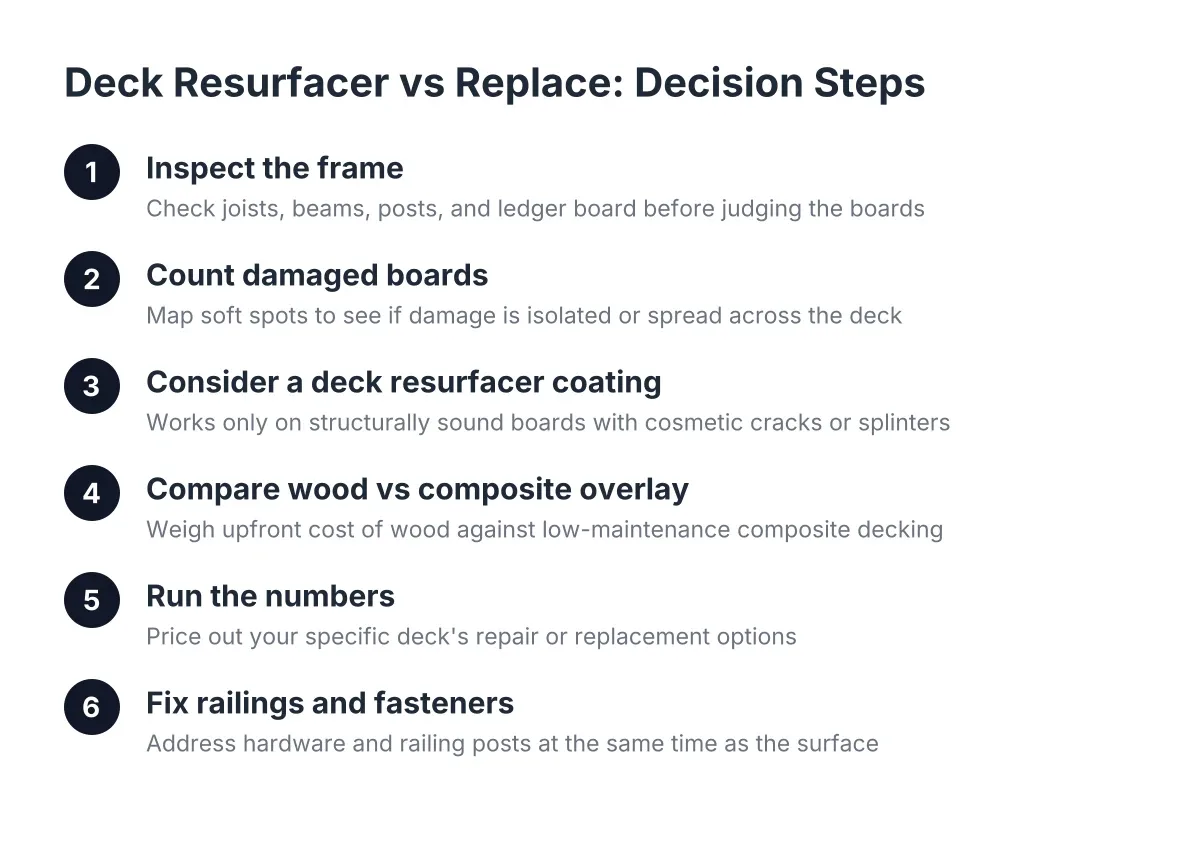
If your deck in Ontario, California looks gray, splintered, and tired, the first question is usually the same: when deciding between deck paint vs stain, which finish is right for your wood? The two finishes behave differently under Inland Empire sun, and picking the wrong one can mean redoing the whole job in two summers instead of enjoying your outdoor living space. This guide walks you through the decision step by step, including the one check most homeowners skip, the structural inspection that tells you whether any finish is worth applying at all.
Here is the honest framing before we start. A new coat of paint or stain is cosmetic. It refreshes the surface of your deck boards, but it does nothing for the joists, posts, and footings underneath. In San Bernardino County and across Southern California, decades of heat cycling can age a frame even when the boards look salvageable. According to the North American Deck and Railing Association (NADRA), an estimated 50 percent of the roughly 50 million residential and commercial decks in the U.S. are more than 25 years old. Many of those decks need more than a finish. So follow the steps in order, and do not jump straight to color swatches.
Step 1: Inspect the Frame Before You Buy Anything
Start under the deck, not on top of it. Paint and stain only make sense if the structure is sound, and this matters double for elevated or multi-level decks on sloped lots, where a failing post or footing carries real consequences.
Check these points with a flashlight and a screwdriver:
- Posts at ground level. Probe the wood where posts meet concrete or soil. If the screwdriver sinks in easily, you have rot, and no finish fixes that.
- Joists and beams. Look for dark staining, soft spots, and sagging lines when you sight down the frame.
- Ledger connection. On an attached deck, the board bolted to the house is the most common failure point. Look for rust, gaps, or missing flashing.
- Fasteners and hardware. Widespread rusted screws or corroded joist hangers signal a deck near the end of its service life.
- Deck boards. A few cracked boards can be swapped out. Cupping, splitting, or movement across most of the surface means resurfacing, not refinishing.
If the frame is solid but the boards are shot, you are a candidate for deck resurfacing, which means replacing the walking surface and railing over the existing structure instead of a full deck replacement. If the frame itself is failing, stop here and call a local deck builder for an evaluation. Finishing a compromised deck wastes money and hides warning signs you need to see. This is the step where a professional inspection earns its keep; an experienced deck repair contractor can tell you in one visit whether the frame has years left or whether you are painting a deck that should be rebuilt.
Step 2: Understand How Deck Paint and Wood Stain Age Differently
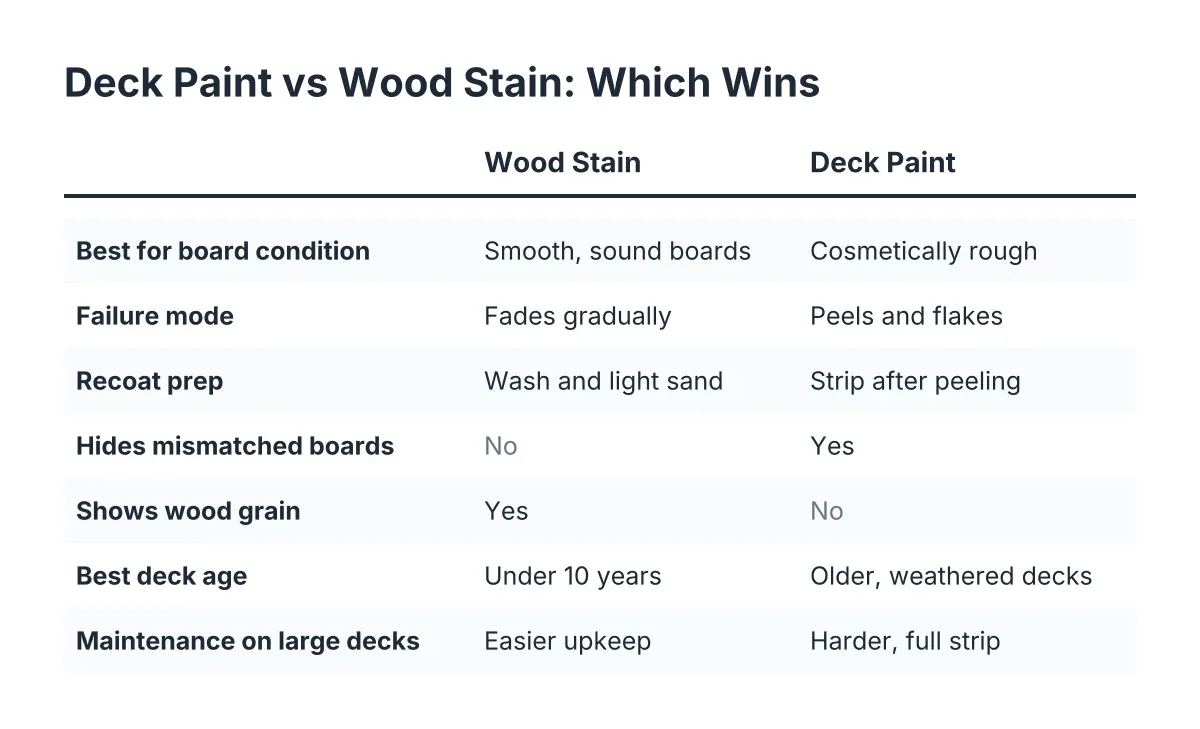
Paint and stain fail in opposite ways, and that difference drives everything else in this guide. Paint forms a solid film on top of the wood; stain soaks into the wood fibers. When paint fails, it peels and flakes, which looks bad and demands heavy scraping and sanding before you can recoat. When stain fails, it fades, which looks tired but recoats with light prep.
Here is how that plays out over time:
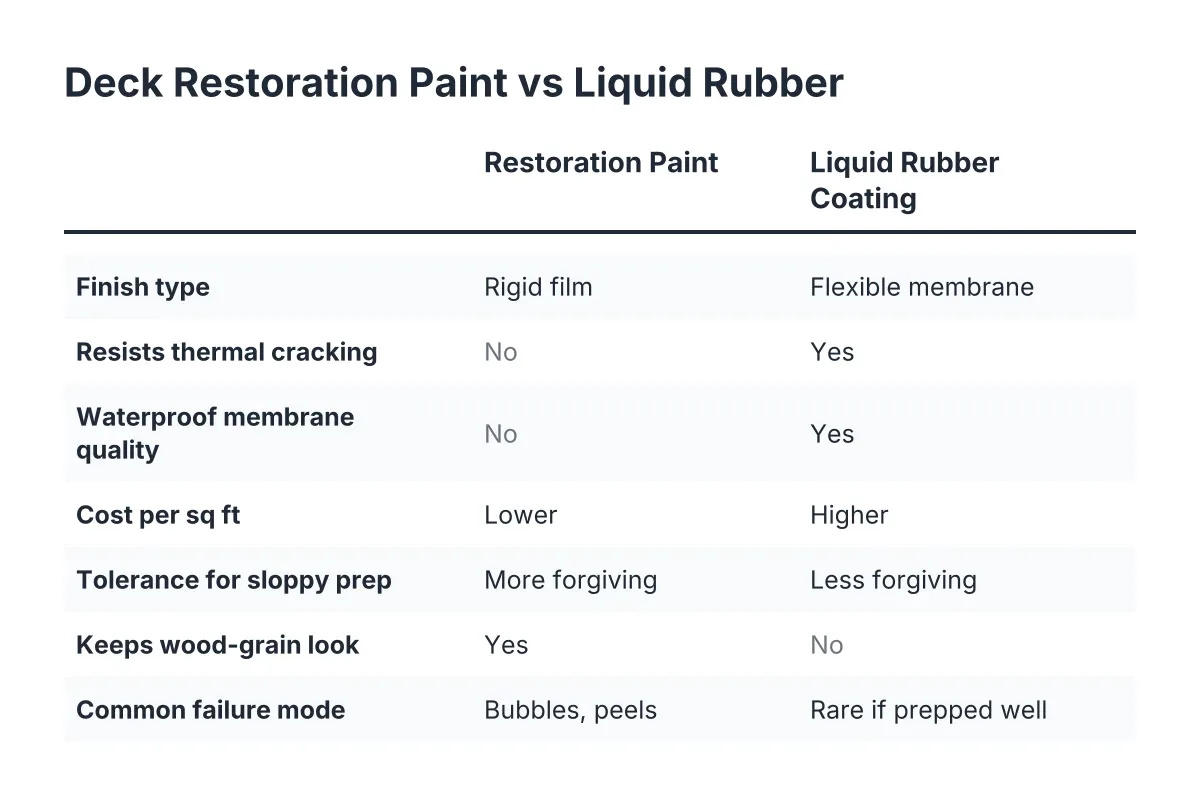
- Solid deck paint hides everything, including old stains, mismatched boards, and gray weathering. However, on a horizontal walking surface it traps moisture under the film. Foot traffic, furniture, and thermal movement crack the film, moisture gets in, and peeling starts. Once paint peels, every future coat requires stripping first.
- Penetrating wood stain (transparent or semi-transparent) shows the wood grain and wears away gradually. It will not peel because there is no film to break. The trade-off is shorter intervals between coats and less ability to hide an ugly surface.
- Solid-color stain sits between the two. It covers like paint but penetrates more and peels less, which makes it a common pick for older wood decks with cosmetic damage.
For Inland Empire decks, UV exposure is the main enemy. Ontario, Rancho Cucamonga, and Fontana get intense sun for much of the year, and south-facing decks take the worst of it. Film-forming finishes blister faster under that heat, while penetrating stains fade faster. There is no finish that ignores our climate; there is only the finish whose failure mode you can live with.
Step 3: Match the Finish to the Condition of Your Deck Boards
Let the wood decide. The condition of your boards narrows the choice between paint and stain more than color preference does.
When Wood Stain Beats Deck Paint
Wood stain beats paint when the boards are structurally sound, relatively smooth, and you want the lowest-maintenance recoat cycle. A penetrating stain wears instead of peeling, so each maintenance coat means a wash, a light sand, and a new application rather than a full strip. If your deck is under ten years old with decent boards, stain is usually the smarter long-term play.
Choose stain if:
- The boards are flat and solid with no deep splintering.
- You like seeing wood grain, or at least do not need to hide the surface.
- You want easier upkeep on a large or multi-level deck where stripping paint off every tread and landing would be a nightmare.
When Deck Paint Beats Wood Stain
Deck paint beats wood stain when the boards are cosmetically rough but structurally fine, and you want a uniform look that hides past repairs. The best deck paint for old decks is a solid, 100 percent acrylic exterior formula made for horizontal surfaces, not wall paint pressed into deck duty. Some thick resurfacing-style coatings can also bridge small cracks on weathered boards.
Choose paint, or a solid-color stain, if:
- The deck has mismatched replacement boards or old patched areas you want to unify.
- The surface is too weathered for a transparent finish to look good.
- You accept more prep work at each future recoat in exchange for full coverage now.
One common question: can you paint over a stained wood deck? Yes, if you clean it, sand it to dull the old finish, and prime bare or glossy spots first. Deck paint over stained wood fails fast when the old stain is oily or the surface was never deglossed, so prep is the whole game. If you want the reverse, a penetrating stain over old paint, that generally does not work; stain cannot soak into a painted film, so you would need to strip to bare wood first.
Step 4: Prep the Surface Like the Finish Depends on It
It does. Most finish failures trace back to prep, not product. Whatever you picked in Step 3, the sequence is the same.
- Replace damaged boards first. Deck board replacement before finishing beats finishing around bad wood. Match the thickness so the new boards sit flush.
- Wash the entire deck. Use a deck cleaner to remove gray fibers, mildew, and dirt. A pressure washer on a low setting helps, but keep the tip moving so you do not gouge the wood.
- Sand. Hit splinters, raised grain, and any glossy old finish. For paint over a previously stained deck, sand everything to a dull surface.
- Let it dry fully. In our Southern California climate this is the easy part, but finish applied to damp wood will fail early no matter the brand.
- Apply in the right weather. Avoid application in direct midday sun on a 100-degree day; the finish dries too fast to penetrate or level. Early morning in late spring or fall is the sweet spot in the Inland Empire.
On deck paint colors, lighter tones run cooler underfoot, which matters on a west-facing deck in Ontario or Corona in August. Dark charcoal boards can get too hot for bare feet. If you want deck paint that looks like wood stain, warm browns and cedar tones in a solid acrylic get close while still covering fully.
Step 5: Decide Whether Refinishing Is Worth It, or Whether to Resurface
Run the honest math before you open a can. Suppose a homeowner in Rancho Cucamonga has a 15-year-old elevated deck on a sloped backyard. The frame inspection in Step 1 comes back solid, but a third of the boards are cracked and the railing wobbles. In that scenario, another coat of stain is a short-term patch. The money is better spent on resurfacing: new boards and deck railing installation over the existing frame, which resets the clock on the surface without paying for new footings and framing.
The cost to refinish a deck is the cheapest option when the boards are good, but it buys you a maintenance cycle, not a new deck. Resurfacing costs more upfront and lasts far longer, especially if you switch to composite decking, which needs no paint or stain at all. There is a reason low-maintenance products dominate; capped composite decking and railing held a 57.8 percent product market share in 2025, according to Grand View Research. As a rough industry reference, Angi puts professionally installed composite at about $25 to $54 per square foot. And if the frame failed Step 1, full deck replacement is the only honest answer; according to the National Association of Realtors' 2023 Remodeling Impact Report, homeowners recover 89 percent of the cost of a new wood deck in added home value, so it is not money thrown away.
As of 2026, the practical hiring guidance for Ontario, CA homeowners is simple. Cleaning, staining, and painting are fair DIY projects on a ground-level deck. For an elevated deck, a multi-level deck, or anything where Step 1 turned up soft wood, rusted hardware, or a questionable ledger, bring in a local deck builder before you finish anything. When you collect quotes, ask two questions: will you inspect the frame before quoting the surface work, and what prep is included in the price? A fair quote itemizes board replacement, prep, and finish separately instead of giving one vague number.
If you are not sure which side of the line your deck falls on, that is exactly what a local inspection is for. We design, build, repair, and resurface decks across Ontario, Rancho Cucamonga, Fontana, Corona, Riverside, Chino, and Upland, including elevated and multi-level decks on sloped lots. Reach out for a free quote, and we will tell you plainly whether your deck needs a finish, a new surface, or a new frame.
If you need custom deck design, Inland Empire Decks can help.
Prefer to talk it through? Call (909) 298-8578 — a quick call is usually the fastest way to get a straight answer for your situation.