Deck Resurfacing Terms Explained: A Plain-English Glossary
If you are getting quotes to fix up a tired deck in Ontario, CA or anywhere in the Inland Empire, the paperwork can read like a foreign language. This deck resurfacing glossary translates the terms a deck builder will actually use, so you can read a quote line by line, ask better questions, and spot problems before they cost you money. Every definition stands on its own, in plain English. Nothing here requires construction experience to follow.
- Deck Resurfacing: new boards on old bones
- Substructure (Framing): the skeleton under your deck boards
- Joists: the beams your boards sit on
- Ledger Board: where the deck meets the house
- Decking Boards: the surface you walk on
- Composite Decking: wood-look boards that skip the staining
- Pressure-Treated Lumber: wood treated to resist rot
- Fasteners: the screws and clips holding it together
- Hidden Fasteners: clips that hide the screw heads
- Dry Rot: fungus quietly eating your wood
- Joist Tape: a moisture barrier for the framing
- Flashing: metal that keeps water out of the ledger
- Deck Inspection: the checkup before the work starts
- Scope of Work: exactly what the quote covers
- Change Order: a written update when the plan shifts
- Building Permit: the city's sign-off on structural work
- Deck Replacement: tearing it all out and starting over
- Staining and Sealing: protecting a wood surface after the work
The Parts of Your Deck
Before you can judge a quote, you need the names of the pieces. These first entries in the deck resurfacing glossary cover the anatomy of a deck from the ground up.
Understanding Deck Resurfacing Framing
The substructure is the hidden frame of posts, beams, and joists that holds up everything you walk on. Think of it as the skeleton under the skin. Resurfacing only works when this frame is still solid, which is why a good deck builder inspects it before quoting anything. If a contractor talks about "framing repairs" alongside resurfacing, expect added labor and lumber in the price.
Joists
Joists are the horizontal boards, usually spaced 12 to 16 inches apart, that your deck boards attach to. They carry the weight of the surface, the furniture, and everyone standing on it. Soft, cracked, or sagging joists are the most common reason a resurfacing job turns into a bigger repair. A quote that mentions "sistering joists" means attaching new lumber beside weak joists to strengthen them without full replacement.
Ledger Board
A ledger board is the horizontal board that attaches a deck to the side of your house. It carries a large share of the deck's weight, so a failed ledger is one of the most serious problems an inspection can find. Ledgers fail when water sneaks behind them and rots the wood or the house framing. If a provider flags ledger issues, take it seriously; that repair protects both the deck and your home.
Decking Boards
Decking boards are the surface planks you walk on, and they are the main thing replaced during a resurfacing project. They take the sun, rain, and foot traffic, so they wear out long before the frame does. In Southern California, intense sun exposure is often what cracks, fades, and splinters boards first. Your choice of new boards, wood or composite, drives most of the material cost.
Composite Decking
Composite decking is a manufactured board made from a blend of wood fibers and plastic, designed to look like wood without the yearly upkeep. It resists fading, splintering, and rot better than most natural lumber, which matters under the strong Inland Empire sun. It costs more per board than standard wood but skips the staining and sealing cycle. Many homeowners in San Bernardino County choose composite when resurfacing so the new surface outlasts the old one by a wide margin.
Pressure-Treated Lumber
Pressure-treated lumber is wood that has been infused with preservatives under pressure to resist rot and insects. It is the standard material for deck framing and a budget-friendly option for the surface boards too. It needs staining and sealing on a regular schedule to look good and last. If a quote lists "PT lumber," this is what it means.
Problems and Fixes
These are the terms that show up when something is wrong, and knowing them helps you understand whether a fix is routine or a red flag.
Dry Rot and Deck Resurfacing Damage
Dry rot is a wood-destroying fungus that breaks down lumber from the inside, often before you see anything on the surface. A screwdriver that sinks into a board with little pressure is the classic test. Rot in the deck boards is normal wear; rot in the joists, posts, or ledger changes the scope of the project. Any honest assessment of deck resurfacing starts with checking how far rot has spread, because new boards over rotten framing is money wasted.
Fasteners
Fasteners are the screws, nails, bolts, and clips that hold a deck together. Old decks were often built with nails that back out over time, creating loose boards and trip hazards. Modern resurfacing jobs use coated deck screws or specialty clips that grip better and resist corrosion. When a quote itemizes fasteners, that is a sign the contractor is pricing real materials rather than guessing.
Hidden Fasteners
Hidden fasteners are clips installed along the edges of deck boards so no screw heads show on the surface. They give the deck a clean, uninterrupted look and remove the small water-collecting holes that screws create. They cost more in materials and labor than face screws. If a smooth, screw-free surface matters to you, ask whether the quote includes hidden fasteners or standard face screwing.
Joist Tape
Joist tape is a sticky waterproof strip applied to the top edge of each joist before new boards go on. It keeps water from sitting in the screw holes and seams where joists rot first. It is a small line item that can add years to the life of the framing under your new surface. A contractor who includes joist tape without being asked is thinking about the long life of the deck, not just the visible result.
Flashing
Flashing is thin metal or waterproof material installed where the deck meets the house to direct water away from the ledger board. Missing or failed flashing is a leading cause of ledger rot and even damage to the home's own framing. Resurfacing is the ideal time to inspect and replace flashing, since the boards covering it are already coming off. Ask any provider whether the ledger flashing will be checked as part of the job.
Staining and Sealing
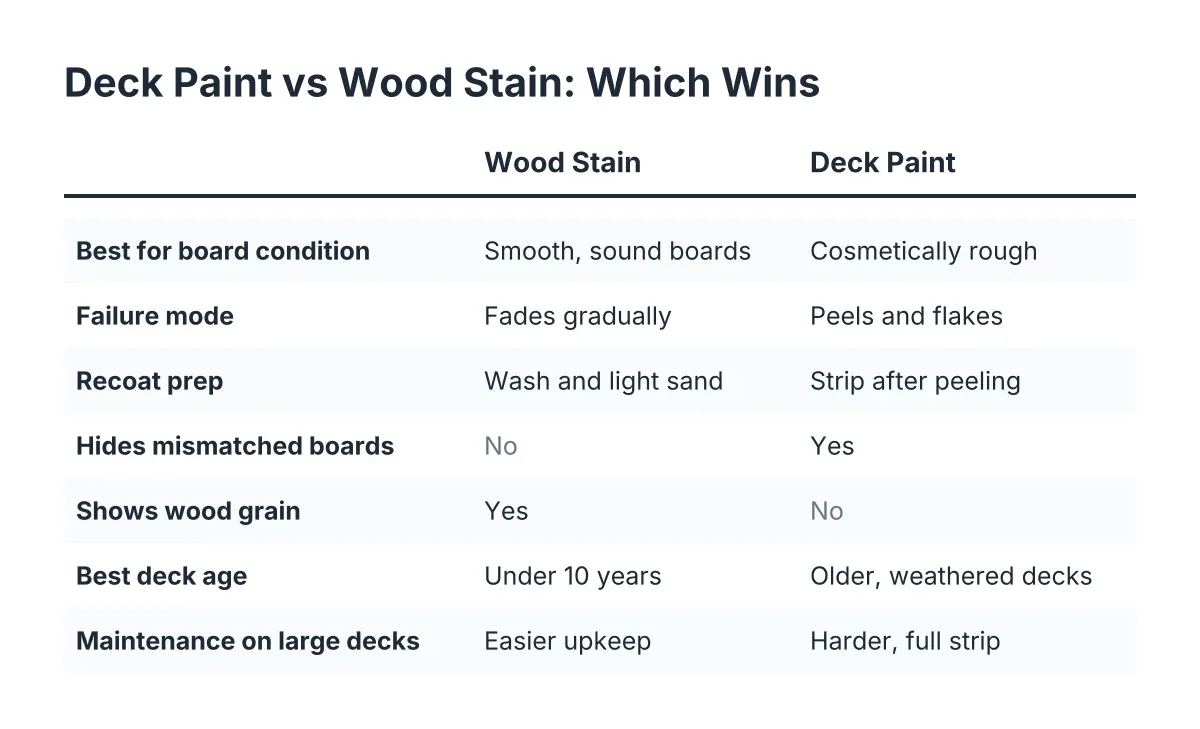
Staining and sealing means applying color and a protective finish to wood decking so it resists sun and moisture. Stain adds color and UV protection; sealer blocks water. New wood boards need this treatment, and they will need it again on a recurring schedule, which is part of the long-term cost of choosing wood over composite. If your quote for a wood surface does not mention finishing, ask who handles it and when.
Process, Paperwork, and Pricing
The last group covers the business side: what the quote says, what the city requires, and how to tell resurfacing apart from a full rebuild. For the dollars-and-cents side, our guide to deck resurfacing cost walks through the factors in detail.
Deck Resurfacing
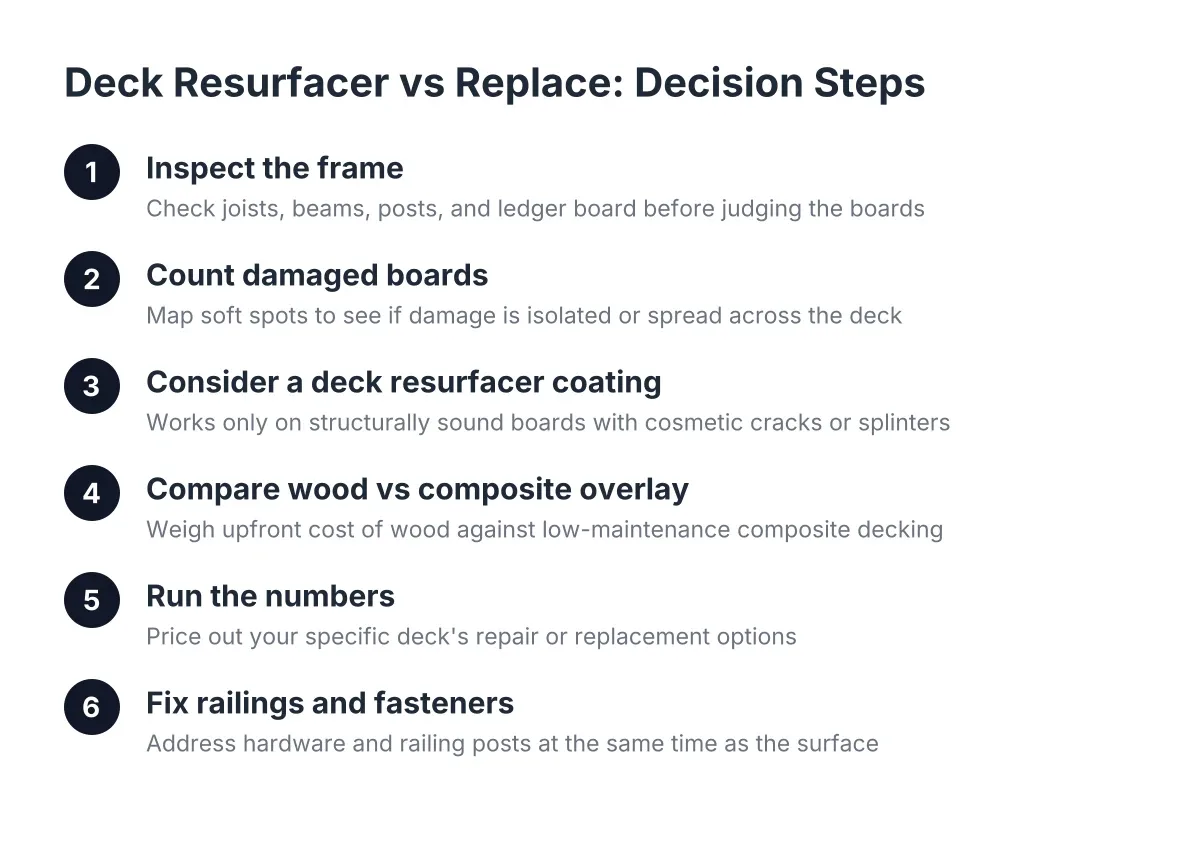
Deck resurfacing means removing the worn deck boards, and often the railings, while keeping the existing frame, then installing a new surface on top. It costs less than a full rebuild because the posts, beams, and footings stay in place. It only makes sense when an inspection confirms the frame is sound. You can read more about how we handle this work for Ontario, CA homeowners on our deck resurfacing service page.
Deck Inspection
A deck inspection is a hands-on checkup of the frame, connections, ledger, and footings before any work is quoted. It tells you whether resurfacing is realistic or whether hidden rot pushes the project toward replacement. A contractor who quotes a resurfacing job without looking under the deck is guessing with your money. In the Inland Empire, sun damage on the surface often hides a frame in decent shape, but only an inspection confirms it.
Scope of Work
A scope of work is the written list of exactly what a contractor will do, what materials they will use, and what is excluded. It is the single most useful document for comparing quotes, because two prices mean nothing if they cover different work. Read it for specifics: board material, fastener type, railing handling, and haul-away of old lumber. Vague scopes lead to disputes; detailed scopes lead to predictable projects.
Change Order
A change order is a written agreement that updates the price or scope after work has started, usually because something unexpected turned up. Finding rotten joists under old boards is the classic example on a resurfacing job. A fair change order states the new work, the new cost, and your approval before anything proceeds. If a contractor explains their change order process up front, that is a good sign of how they handle surprises.
Building Permit
A building permit is official approval from your city to perform structural work on your property. Whether a resurfacing project needs one depends on the scope; swapping boards is treated differently than altering framing or railings. Rules vary by city, so check with your local building department in Ontario, CA or your own town before work begins. A deck builder familiar with San Bernardino County and Riverside County permitting can handle this step for you.
Deck Replacement
Deck replacement means demolishing the entire deck, frame and all, and building new from the footings up. It is the right call when the substructure has widespread rot, undersized framing, or failing footings. It costs more than resurfacing but resets the clock on every part of the deck. A trustworthy contractor will tell you plainly which option your deck actually needs, not which one pays them more.
Using These Terms
With this deck resurfacing glossary in hand, you can read a quote line by line and know what each item means for your project and your budget. You can ask a deck builder pointed questions about the ledger, the joists, and the scope of work, and judge the answers. That is the difference between hoping a quote is fair and knowing it is.
If you need custom deck design, Inland Empire Decks can help.
Prefer to talk it through? Call (909) 298-8578 — a quick call is usually the fastest way to get a straight answer for your situation.