Deck Railing Installation Terms Explained: A Plain-English Glossary
If you are getting quotes for deck railing in Ontario, CA, the paperwork can read like another language. This deck railing installation glossary breaks down the terms you will hear from deck builders across the Inland Empire into plain English. Use it to read a quote line by line, ask sharper questions, and spot vague answers before you sign anything. Every definition stands on its own, so you can jump straight to the word that confused you.
- Baluster: the vertical bars between posts
- Guardrail: the required safety barrier at deck edges
- Handrail: the graspable rail along stairs
- Newel Post: the strong anchor post at corners and stairs
- Top Rail and Bottom Rail: the horizontal pieces framing the infill
- Infill: whatever fills the space between posts
- Post Cap: the finishing piece on top of a post
- Rail Height: how tall the railing must be
- Baluster Spacing: the maximum gap allowed between bars
- Blocking: hidden framing that stiffens post connections
- Post Mount vs. Fascia Mount: where the posts attach to the deck
- Load Requirement: how much force a railing must resist
- Composite Railing: low-upkeep railing made from wood and plastic blend
- Cable Railing: tensioned steel cables as the infill
- Powder Coating: a baked-on finish for metal railing
- Permit: the city's written approval for the work
- Linear Foot: how railing is measured and priced
- Scope of Work: the written list of what the quote covers
Railing Parts and Anatomy
These are the pieces of the railing itself. When a deck builder walks your Ontario, California backyard and starts naming parts, this is what they mean.
Baluster Components in Deck Railing Installation
A baluster is one of the vertical bars that fill the space between railing posts. Balusters do the real safety work, keeping kids and pets from slipping through the railing. They come in wood, metal, and composite, and the style you pick changes both the look and the price of the job. If a quote lists "balusters" separately, the builder is pricing the infill apart from the posts and rails, which makes comparing quotes easier.
Guardrail
A guardrail is the barrier that runs along the open edges of a deck to keep people from falling off. Building codes in California require guardrails once a deck sits a certain height above the ground, so this is usually not optional. When a contractor says your old deck "needs a guardrail," they are telling you the deck is high enough that code demands one. That requirement shapes the whole railing design, from height to strength.
Handrail
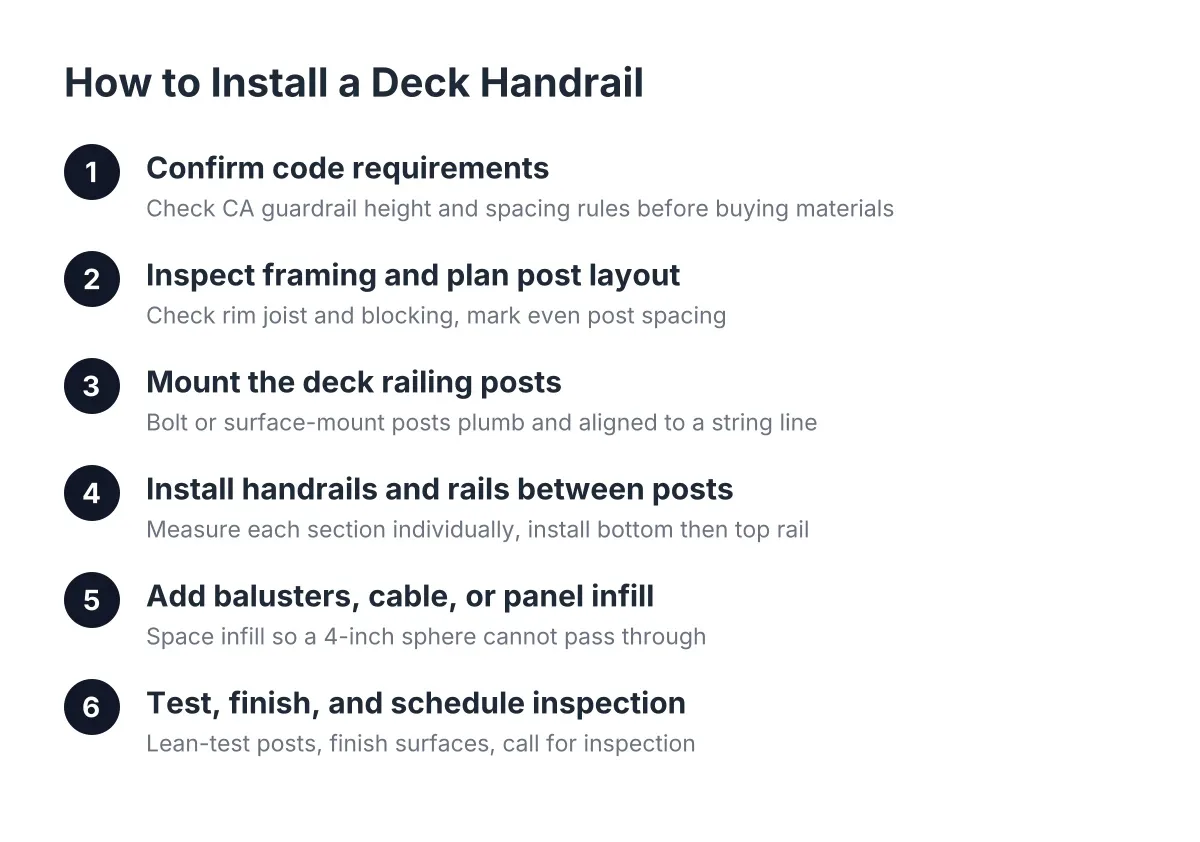
A handrail is the rail you grip with your hand while going up or down deck stairs. It is not the same thing as a guardrail; a handrail must be shaped so your hand can wrap around it, which is why codes often call for a "graspable" profile. Stairs usually need both a guardrail for fall protection and a handrail for grip. Our walkthrough of how contractors install a handrail in California shows what that looks like step by step.
Newel Post
A newel post is the heavy structural post at the end of a railing run, at corners, or at the top and bottom of stairs. It anchors the whole system, so it has to be fastened to the deck frame, not just the deck boards. A loose newel post is one of the most common problems we find during deck repair visits in the Inland Empire. If your post wobbles when you lean on it, the connection underneath is the issue, not the post itself.
Top Rail and Bottom Rail
The top rail and bottom rail are the horizontal pieces that run between posts and hold the balusters or other infill in place. The top rail is the part you lean on and the part guests see first, so builders often upgrade it even on budget railings. Additionally, the bottom rail keeps the infill rigid and must sit low enough that nothing can slip under it. Quotes sometimes call these "rails" collectively, which is fine as long as the material is spelled out.
Infill
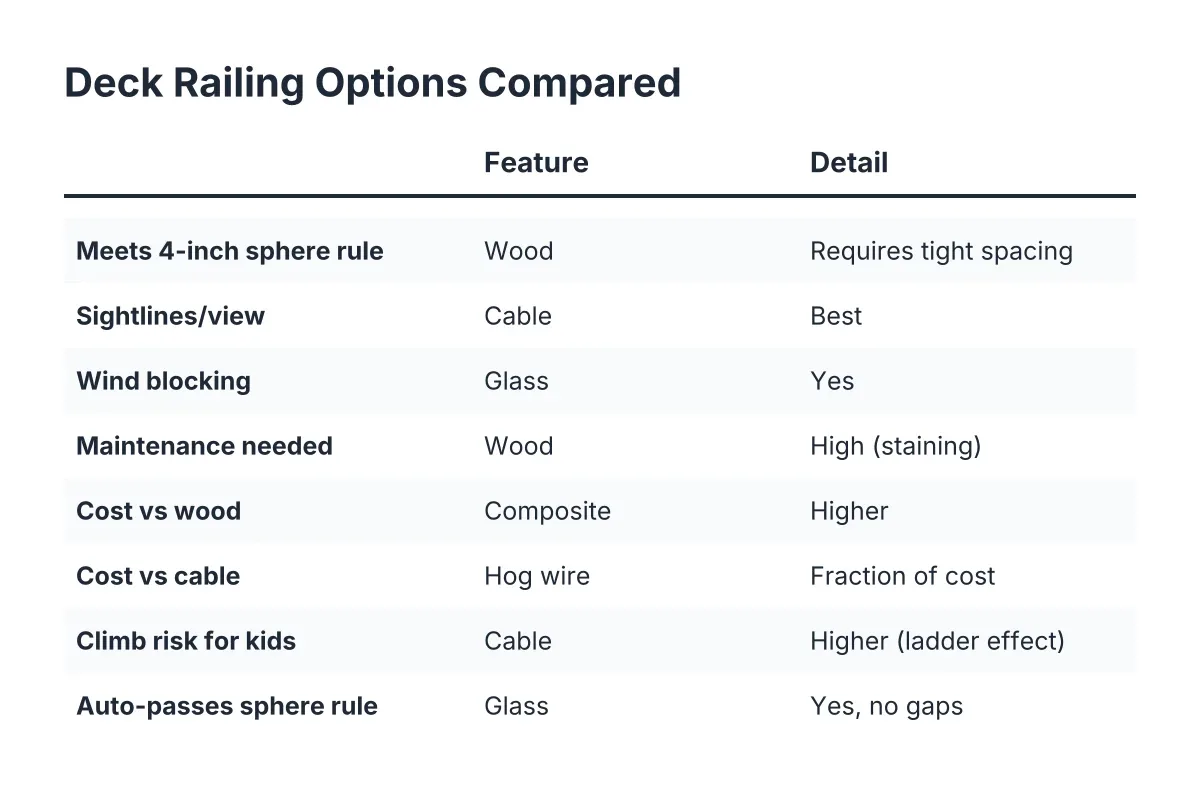
Infill means whatever fills the open space between railing posts, such as balusters, glass panels, metal mesh, or cables. Infill is the biggest style decision in a railing project and often the biggest cost driver too. Swapping wood balusters for glass panels changes the price without changing a single post. If you want to compare options that pass inspection locally, see these deck railing ideas that meet Ontario, CA code.
Post Cap
A post cap is the finishing piece that sits on top of a railing post. It sheds water off the exposed end grain of a wood post, which slows down rot, and it cleans up the look of the railing. Some caps include low-voltage lights, a popular upgrade for outdoor living spaces here in Southern California where decks get used after dark most of the year. Caps are a small line item, but skipping them on a wood railing shortens its life.
Code and Safety Terms in Deck Railing Installation Glossary
Inspectors and deck builders use these terms when they talk about what the law requires. This part covers the words that decide whether your railing passes inspection.
Rail Height
Rail height is the vertical distance from the deck surface to the top of the guardrail. Building codes set a minimum height for residential decks, and the number can differ for stairs versus flat deck areas. Your Ontario, CA builder should confirm the required height with the city before ordering materials. If a quote does not mention rail height at all, ask; a railing built one inch too short fails inspection and gets rebuilt at someone's expense.
Baluster Spacing
Baluster spacing is the maximum gap allowed between vertical balusters, set by code so a small child cannot fit through. Inspectors check this with a sphere gauge, so "close enough" does not pass. Spacing rules also apply to the gap under the bottom rail. This is a detail that separates careful deck builders from rushed ones, because fixing spacing after the railing is assembled means tearing it apart.
Blocking
Blocking means short pieces of lumber added between deck joists to stiffen the frame where railing posts attach. Posts bolted only to a single rim board can flex under pressure, so good builders add blocking behind every post connection. You will never see blocking once the deck is finished, which is exactly why it matters in a quote. A builder who lists blocking is telling you they plan to do the hidden work right.
Post Mount vs. Fascia Mount
Post mount versus fascia mount describes where railing posts attach: on top of the deck surface or bolted to the outside face of the frame. Surface-mounted posts keep the full deck area usable but need strong hardware underneath. Fascia-mounted posts bolt to the rim of the deck, which saves floor space but demands a solid frame to grab onto. During deck railing installation, the mounting method affects both hardware cost and how the finished edge looks, so it should appear in your scope of work.
Load Requirement
A load requirement is the amount of force a railing must resist without failing, as set by building code. In plain terms, the railing has to hold when an adult leans or falls against it. Load requirements are why post connections, blocking, and hardware matter more than the pretty parts on top. If a builder talks about meeting load requirements, they are thinking about the railing as a safety system, not just trim.
Materials and Finishes
Composite Railing
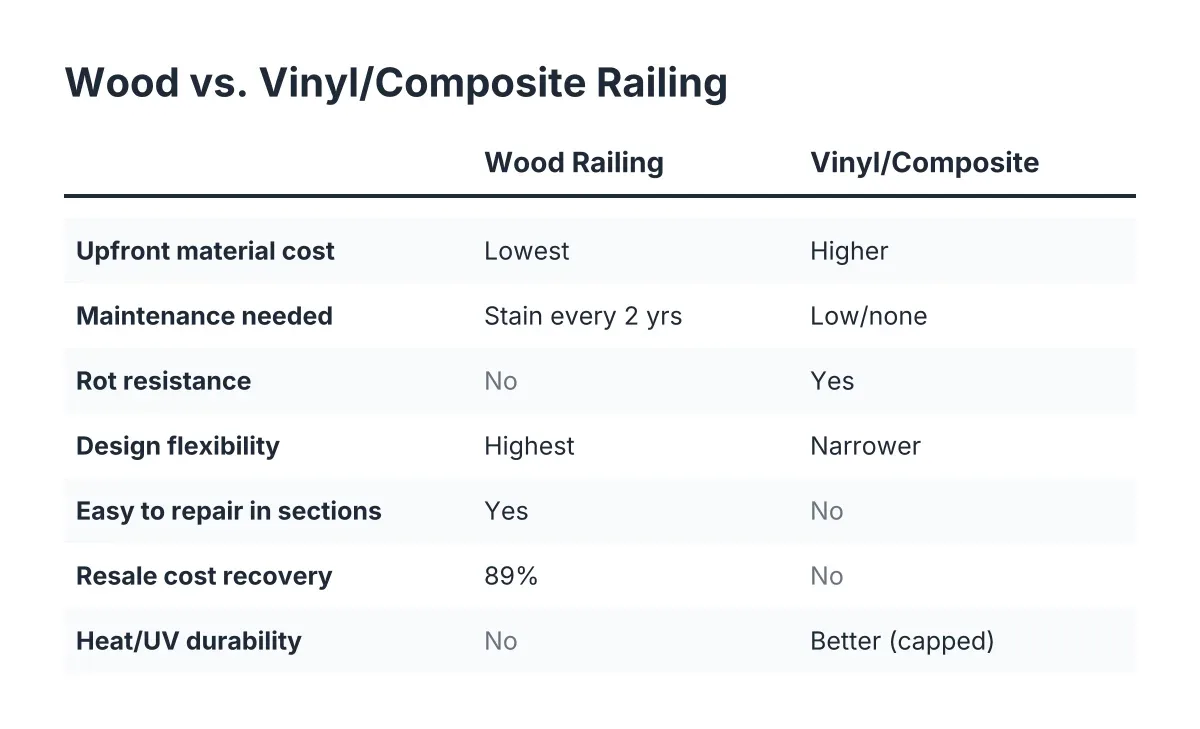
Composite railing is railing made from a blend of wood fibers and plastic, molded into rails, posts, and balusters. It resists rot, insects, and fading, which matters in the dry heat and strong sun of San Bernardino County and Riverside County. It costs more upfront than wood but needs no staining or sealing afterward. For a side-by-side look at long-term costs, read our comparison of wood, vinyl, and composite deck railing.
Cable Railing
Cable railing is a system that uses horizontal stainless steel cables, pulled tight between posts, as the infill instead of balusters. Homeowners pick it for the open view; the thin cables disappear against the backyard. The cables must stay under tension to meet spacing rules, so the posts and hardware have to be stout. Expect a cable system to cost more than standard balusters because of that hardware.
Powder Coating
Powder coating is a dry finish baked onto metal railing parts, creating a tougher coat than ordinary paint. It resists chipping, fading, and rust, which is why most quality aluminum and steel railings come powder coated from the factory. For Inland Empire homeowners, the main benefit is sun resistance; a powder-coated railing keeps its color through years of Southern California summers. If a metal railing quote does not say "powder coated," ask what the finish is.
Pricing and Paperwork
Permit
A permit is written approval from your city's building department allowing the railing work to proceed. In Ontario, California, railing work tied to a new deck or a structural change usually needs one, and the job gets inspected before it is signed off. A permit protects you; it means an independent inspector checks the safety work. A builder who handles deck permits and planning as part of the job is saving you trips to the counter.
Linear Foot
A linear foot is a straight-line measurement of length, and it is how most railing is measured and priced. If your deck has 40 feet of open edge, you need 40 linear feet of railing, regardless of height or style. Quotes priced per linear foot make it easy to compare builders, as long as each quote covers the same material and mounting method. Our guide to deck railing installation costs explains what pushes that per-foot number up or down.
Scope of Work
A scope of work is the written section of a quote that lists exactly what the builder will do, with what materials, and what is excluded. For railing jobs, a good scope names the material, rail height, post mounting method, infill type, and who pulls the permit. Vague scopes lead to change orders and surprise costs mid-project. If two quotes differ in price, compare the scopes first; the cheaper one often simply includes less.
Using These Terms
With this deck railing installation glossary in hand, you can read a railing quote the way a builder does: parts, code items, materials, and paperwork, each on its own line. When something is missing, like rail height or blocking, you now know to ask about it before work starts. That one conversation is often the difference between a railing that passes inspection and one that gets rebuilt.
If you need custom deck design, Inland Empire Decks can help.
Prefer to talk it through? Call (909) 298-8578 — a quick call is usually the fastest way to get a straight answer for your situation.